Finding a Shared Workspace for Woodworking

Categories
Cabinet & Furniture Making, Students, Carpentry, Preservation Carpentry, Community EducationInterest in woodworking is enjoying a resurgence. After years of passive consumption of screen-based content, more and more individuals are discovering woodworking and the creative, emotional, and practical rewards of creating something useful with their own hands. Actor and woodworker Nick Offerman put it this way, “And that’s the whole joy and magic of being a human…We can do things with our brains and our hands to effect improvement around us.”
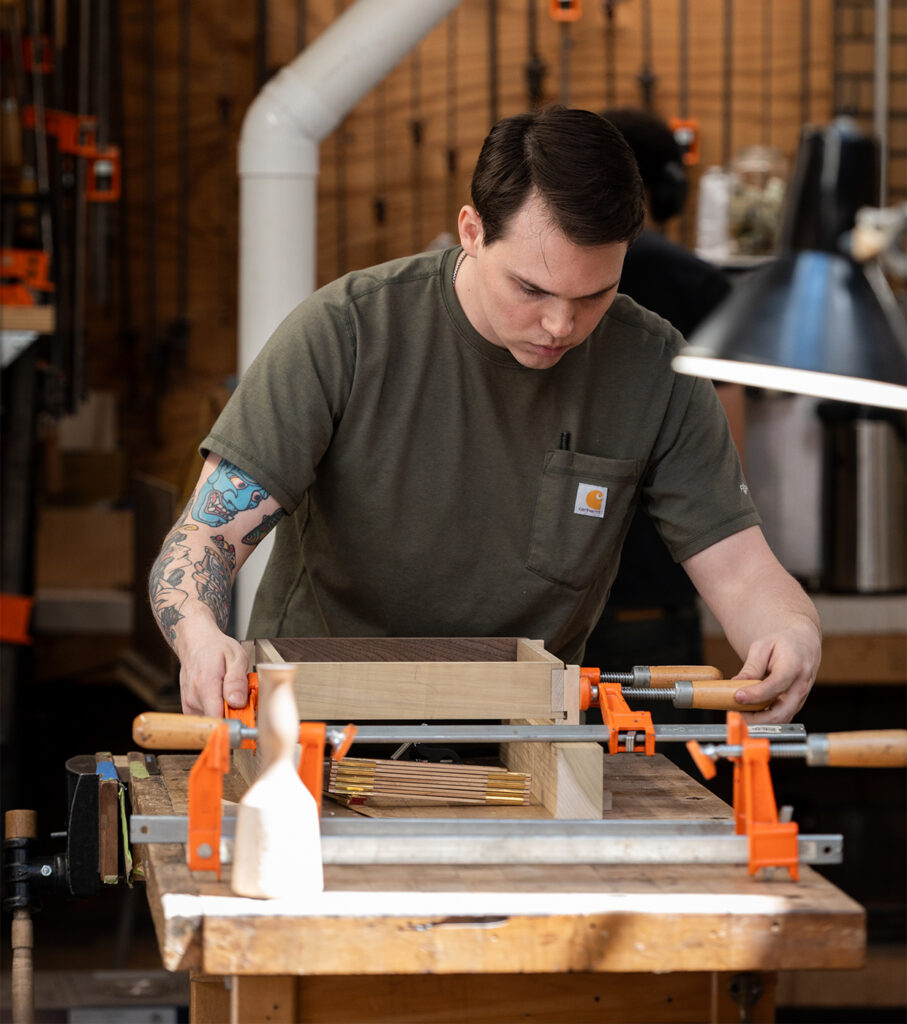
But for many woodworkers—both hobbyists and aspiring professionals—a major stumbling block can be the significant investment into a well-equipped workspace where they can safely learn and work. Not only can finding an adequate location and space be a challenge, but it can be prohibitively expensive to fully equip a workshop.
The good news is that you don’t have to go it alone. Many areas have organizations, often non-profits, who sponsor “maker spaces” and community woodships for shared use. These organizations, typically membership-based, offer space and a mix of hand and power tools that support a wide range of woodworking projects. They also offer a unique opportunity to tap into a community of like-minded individuals for collaboration and support.
How do you find these spaces? Here are some suggestions:
Search online using phrases like “community workshop,” “tool co-op,” “woodworking maker space near me,” and similar.
Ask other woodworkers via local woodworking forums on sites like Reddit (e.g., r/woodworking). These communities often share tips on woodworking spaces and resources. Or, see if there is a woodworkers guild in your area. You could even ask around at a local lumber supplier or woodworking tool shop; their staff might have suggestions.
Check out libraries and community centers which may host their own programs or have tool lending libraries.
As an example, in the greater Boston area where North Bennet Street School is located, there are several community makerspaces that are accessible via membership or other programs. They include:
Artisans Asylum, a nonprofit community makerspace and fabrication in Boston’s Allston-Brighton area.
Hatch Makerspace, an arm of the Watertown Public Library, a free community workshop and creative studio.
Cambridge Hackspace, a 501(c)3 in Somerville, MA, offers a large workshop area and weekly community project gatherings for members.
Mill Forge Makerspace, a membership-based collaborative makerspace located south of Boston in Norwood.
It may take a little research, but chances are your area will have shared workspace options available. Each space and organization will offer a unique blend of space, tools, and support. Before you commit, it’s a good idea to visit the community workshops you’re interested in. Many offer tours and/or open houses. For safety reasons, you’ll typically need to demonstrate knowledge of safety protocols and tool competency, either through completing an in-house training course or demonstrating proficiency.
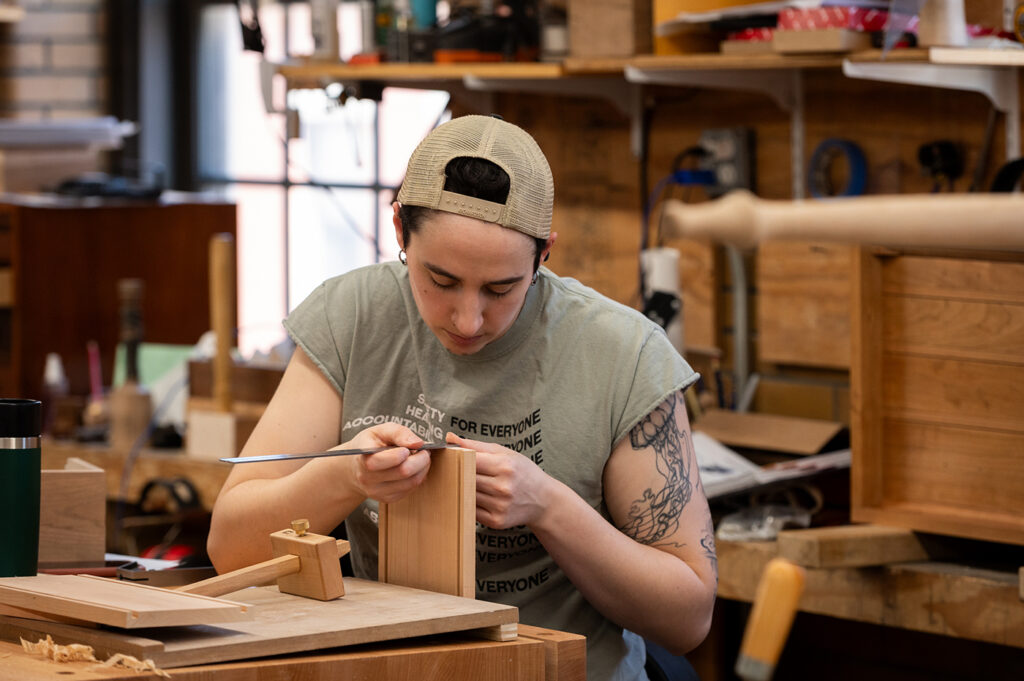
Now that you see all the options out there for shared woodworking spaces, are you ready to start your woodworking journey? We can help you get started with our popular community education woodworking or carpentry courses. Woodworking 101 offers a great overview of shop safety and familiarizes students with some of the most common machines and hand tools used in woodworking.
Just as important, taking a class is a great way to connect with other people who share your interest in woodworking. You’ll learn alongside fellow hobbyists and aspiring professionals while gaining insight from instructors who work in the field every day. That kind of environment naturally builds community—giving you opportunities to ask questions, exchange ideas, and meet others who may already be working in shared shops or maker spaces. For many students, these connections become an important part of their woodworking journey, opening the door to new resources, collaborations, and even shared workspace opportunities down the road.

