Much More Than Benches

Unsung heroes of furniture making get an upgrade
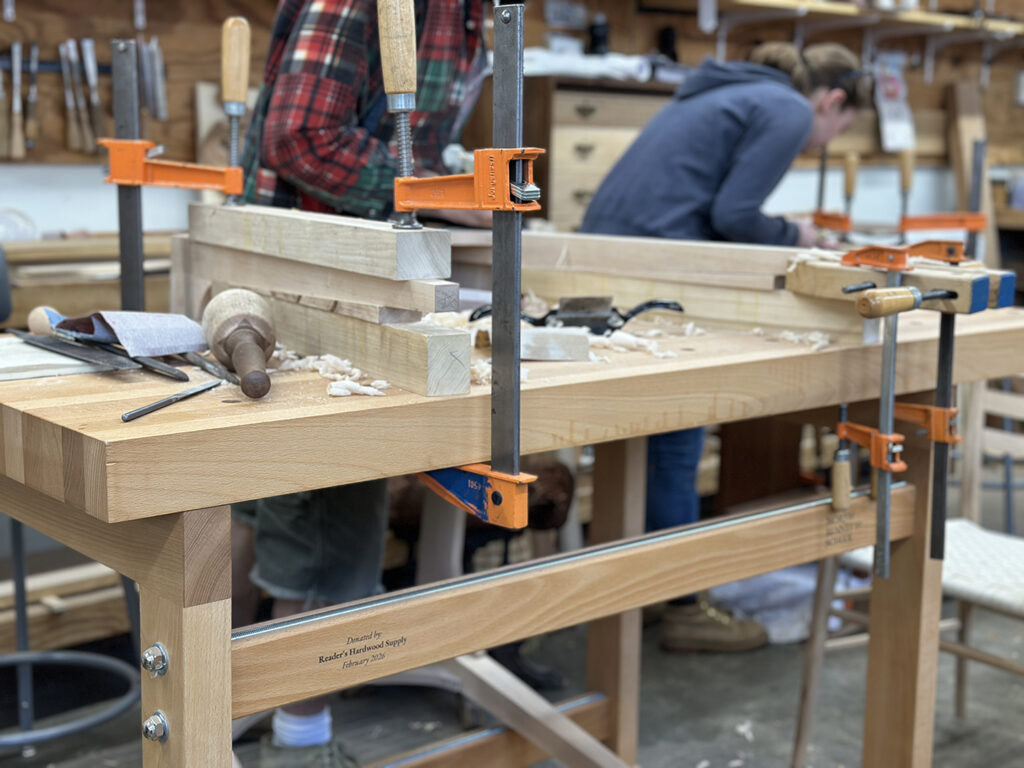
Here’s a riddle: What piece of furniture gets hammered, scraped, dinged, dented, and drilled on for decades and still remains standing? The answer: a North Bennet Street School workbench. At NBSS, every nick, dent, hole, and scrape in a workbench reflects the energy, dedication, and growth of our students.
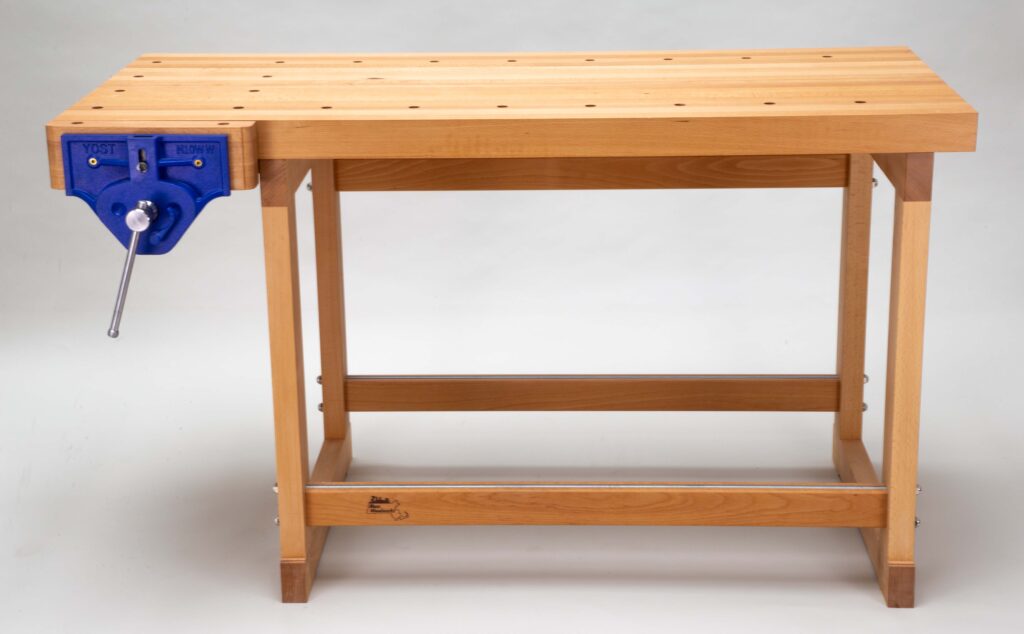
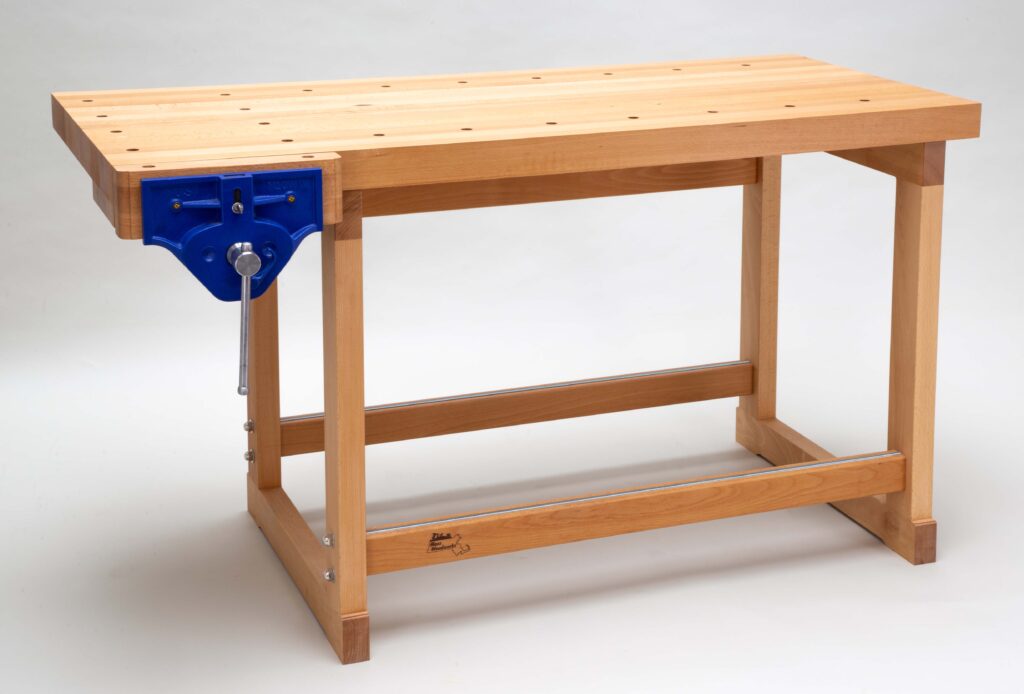
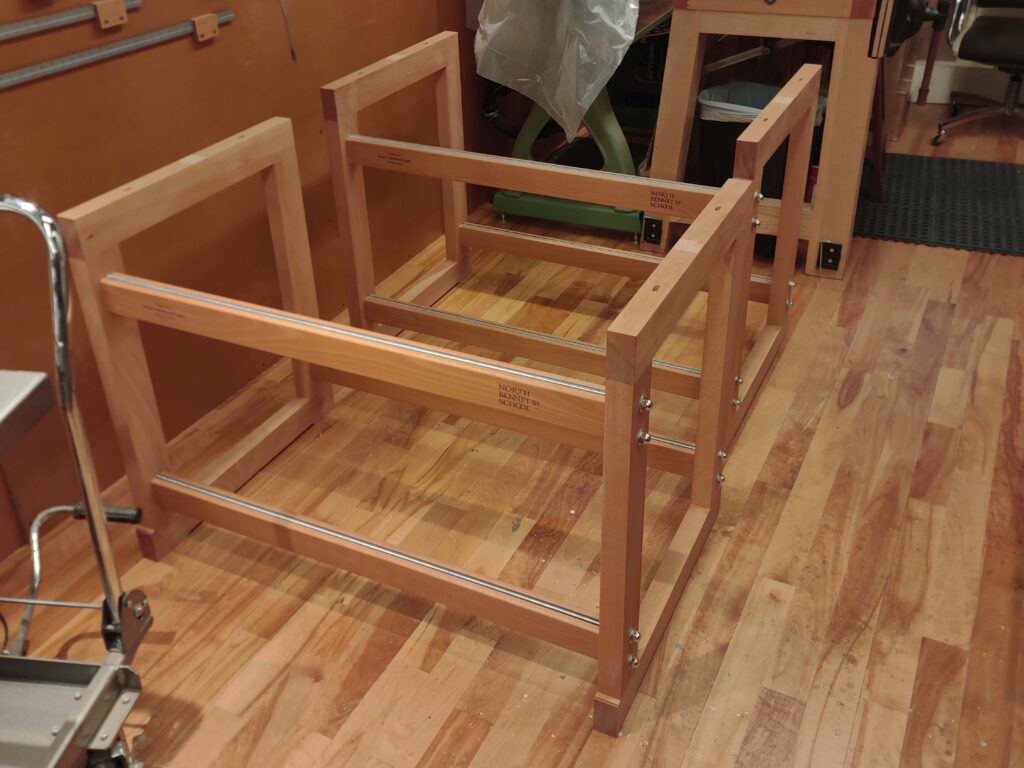
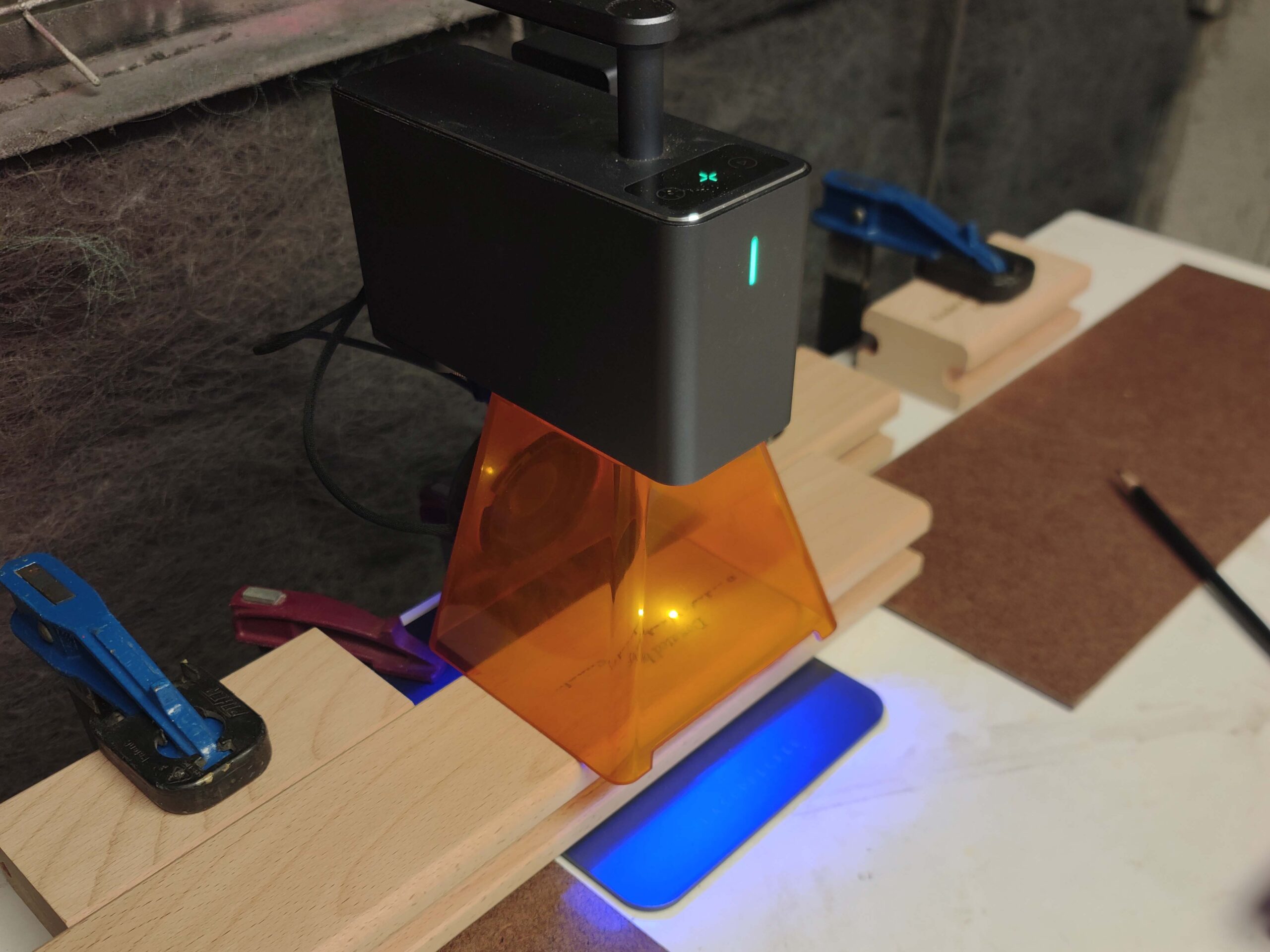
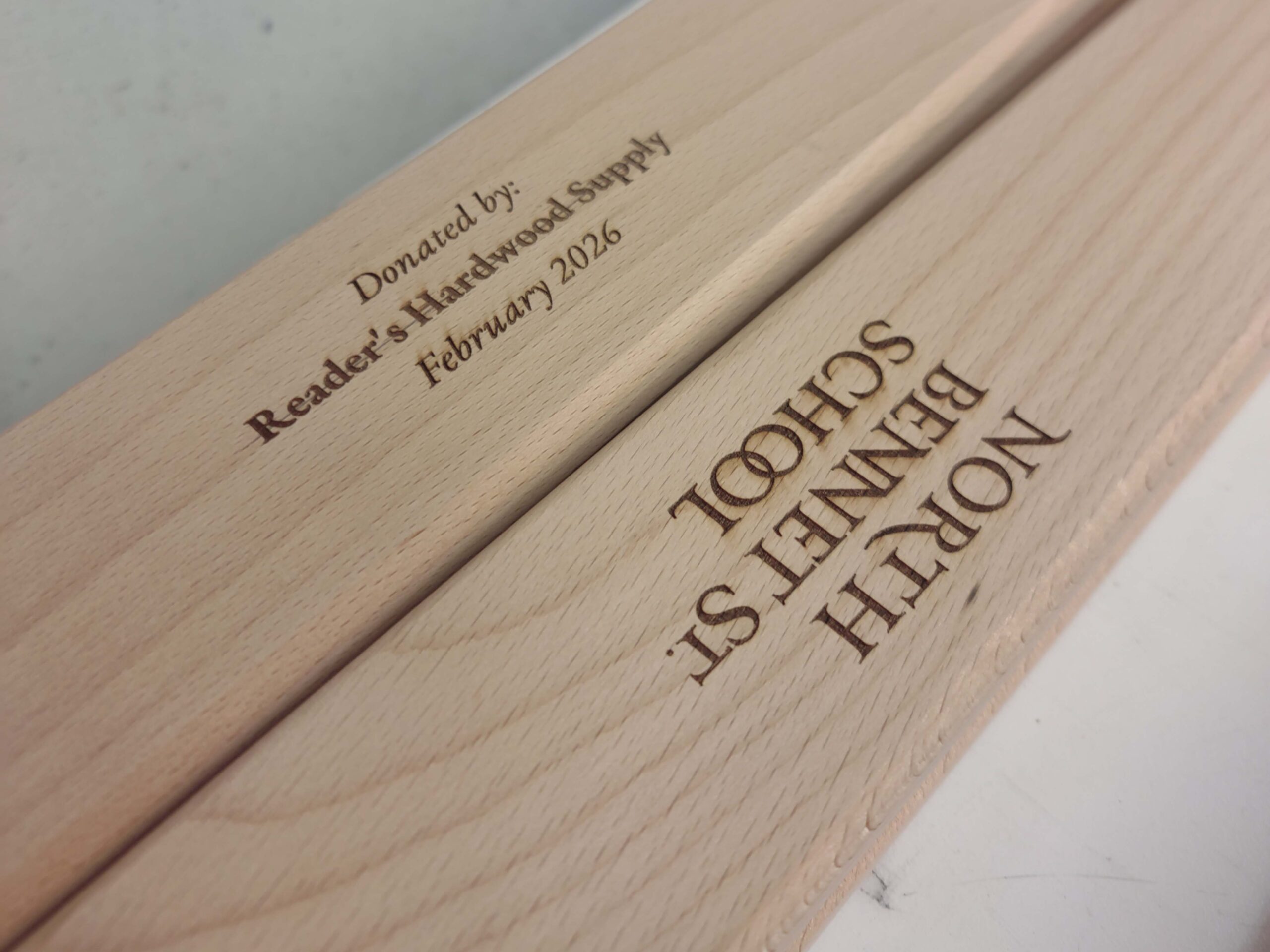
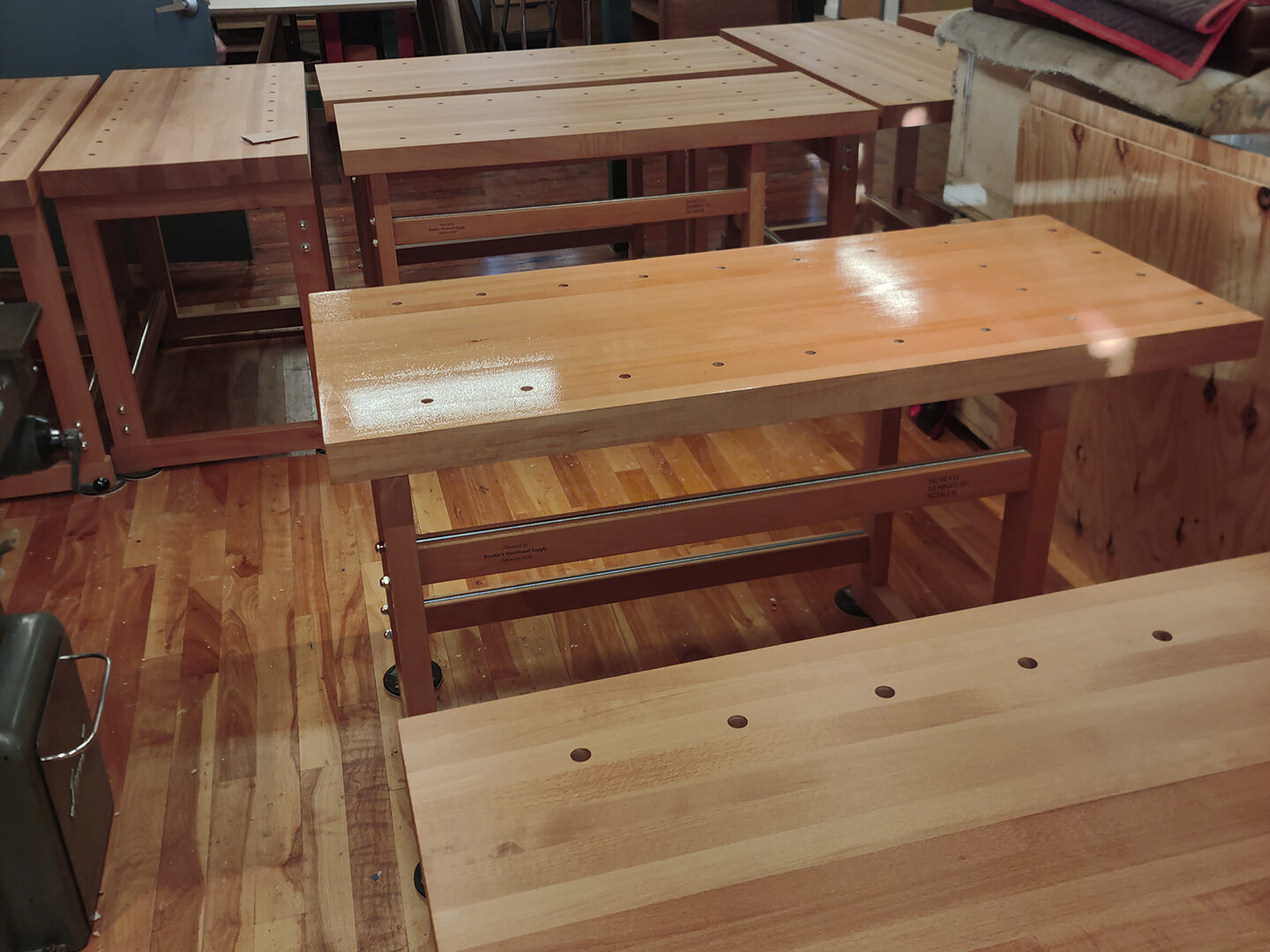
Some workbenches have been at NBSS since the 1960s, and after years of grueling treatment they occasionally need a refresh. The tops get replaced. The vices swapped. There also comes a time when an entire workbench needs to be replaced. Thanks to a generous donation from Jim Reader, owner of Reader’s Hardwood Supply and a longtime supporter and supplier of NBSS, the Cabinet & Furniture Making (CF) program now has nine new workbenches.
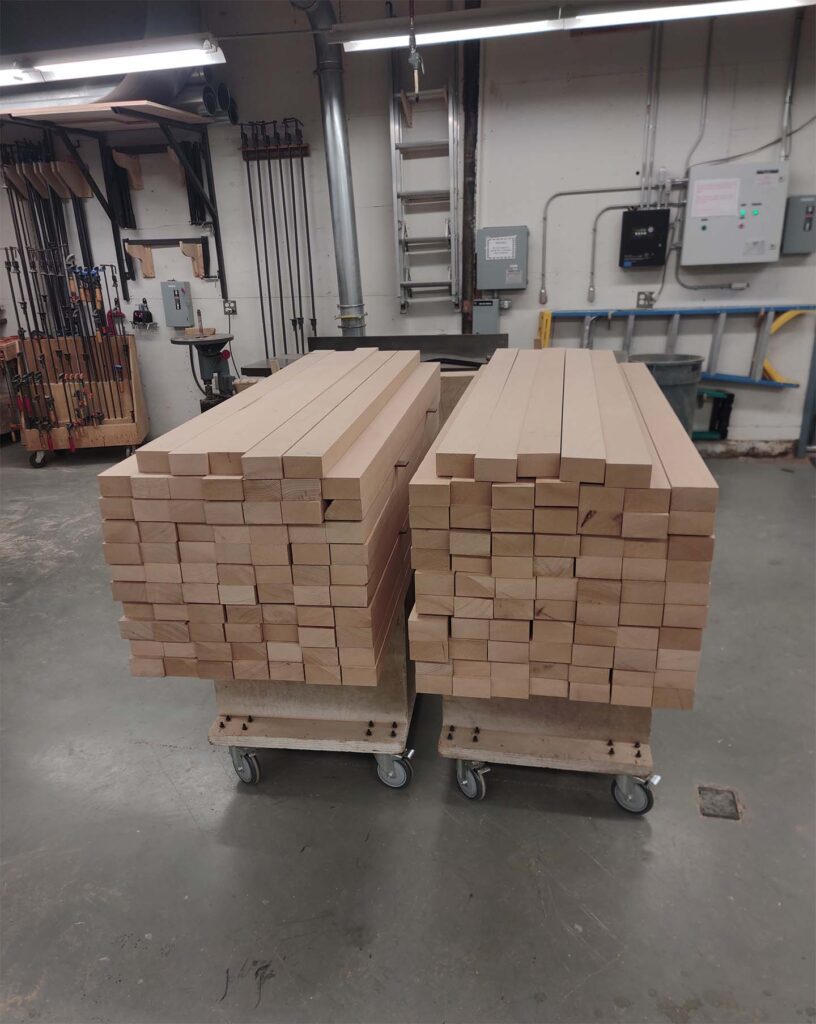
Jim sourced planks of exquisite and sustainably-harvested European beech, a hardwood that is ideal for durable workbenches. In addition to donating the lumber, Jim made a gracious monetary gift that enabled Community Education Technician and Cabinet & Furniture Making graduate Bob Miller CF ’11 to design and build the nine workbenches.
A bench design suited for NBSS
For years, Bob has constructed workbenches for individuals and schools around the country in the Charlestown Furniture Makers building, a woodworkers’ collective that he co-manages. While all of Bob’s workbenches are built to be “robust, reasonably heavy, and very stable,” each bench is made to fit the client’s specific needs. For NBSS, Bob prioritized simplicity, reproducibility, and repairability.
“We need to be able to teach our students in a way that equips them to go out into the world and get to work,” Bob explains. “It would be a disservice to our students to train them on a very complicated bench that they aren’t able to reproduce immediately out of school, and so these benches needed to be something that they can approximate and reproduce on their own.”
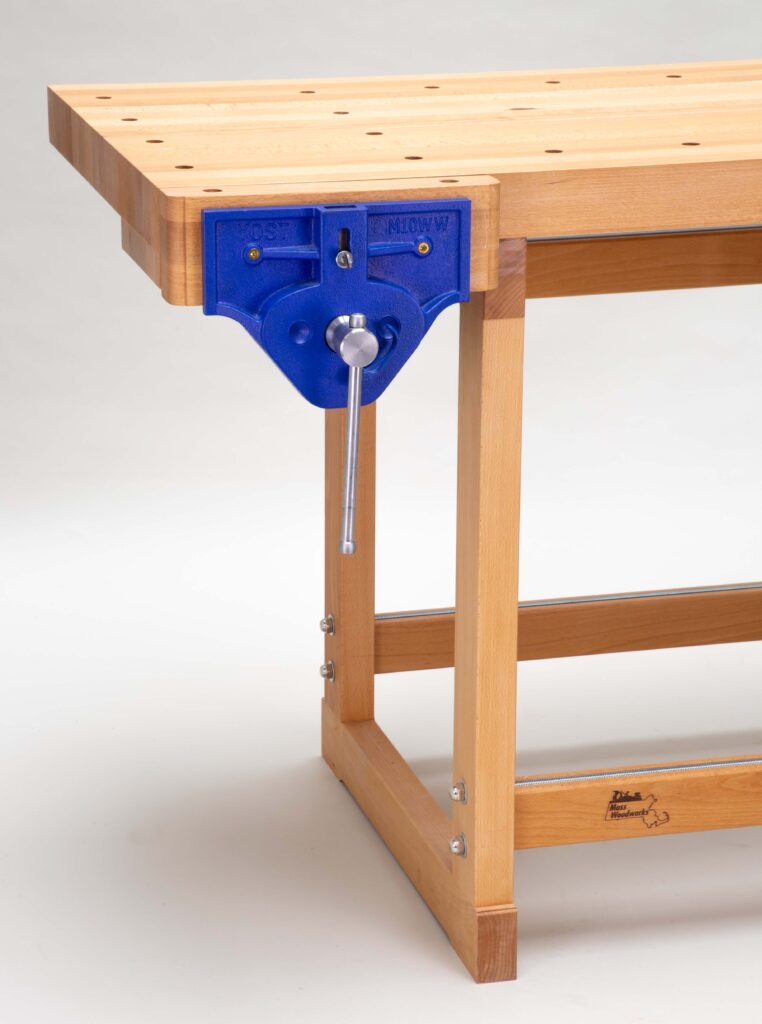
In the CF program, students develop many different skills while working on an array of projects. So rather than design a workbench for one specialized task such as planing or finishing, Bob designed “a good generalist bench that works well for everything.” This inclusive design mirrors the existing, older benches that still remain in the CF space. Bob observes that at NBSS “the workbenches have always been very simple. There’s no elaborate vices. There’s no elaborate work holding. They’re not complicated.”
A meditative and sustainable process
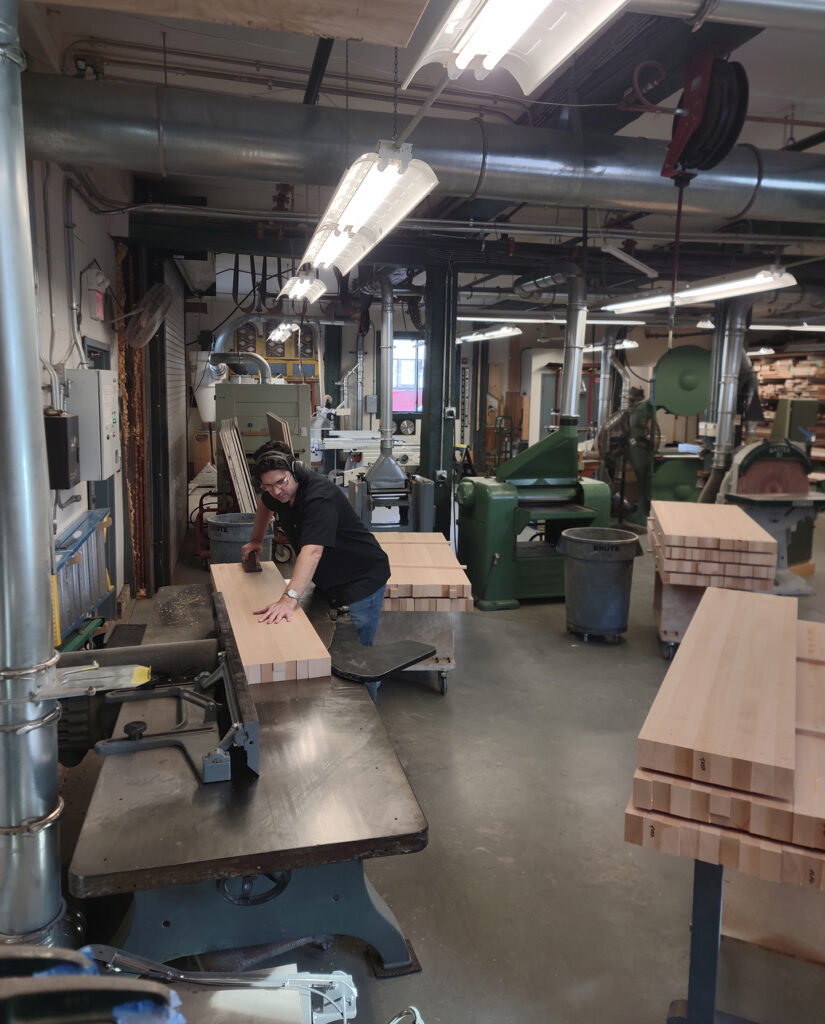
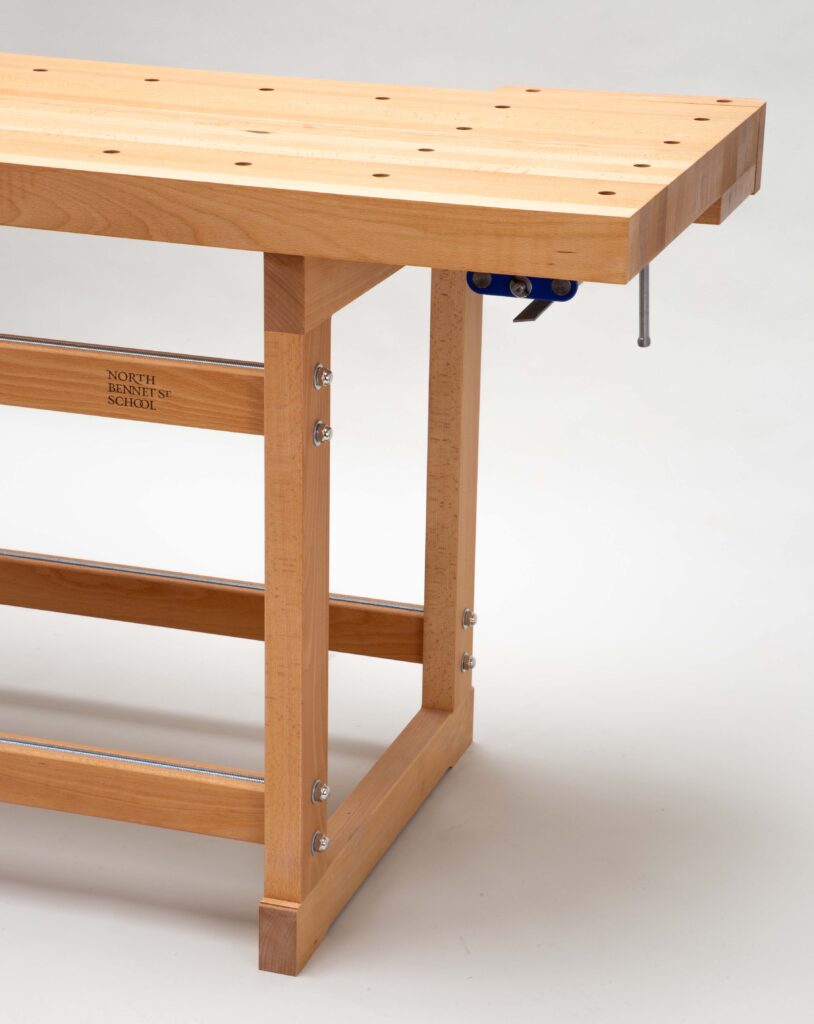
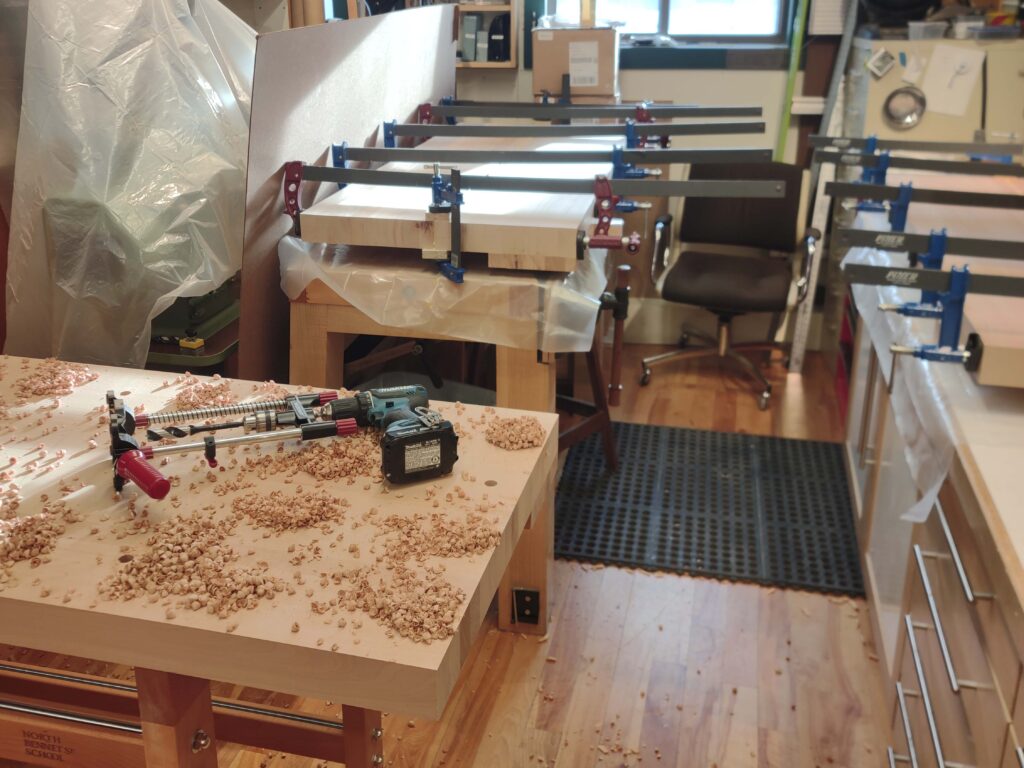
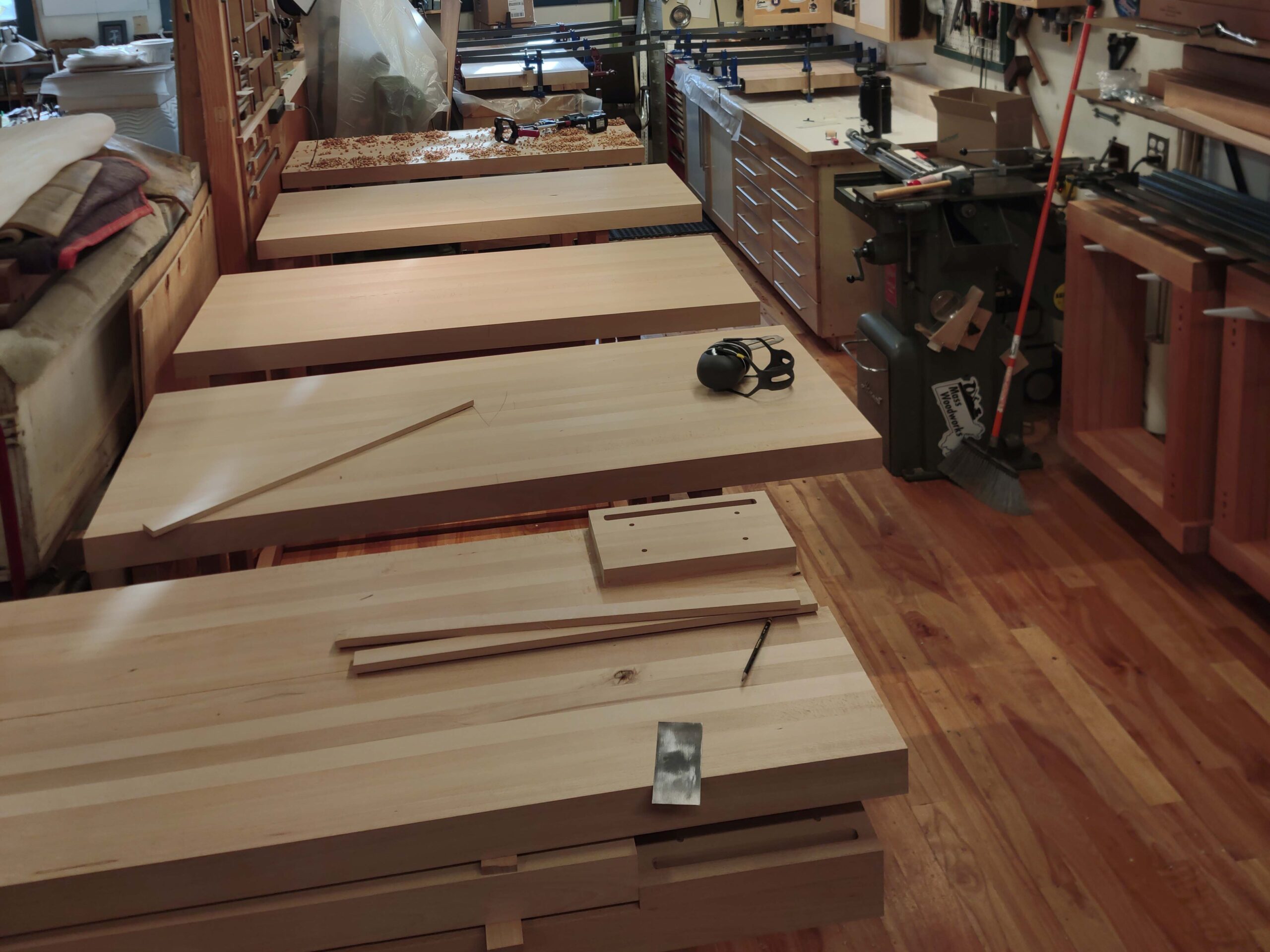
To produce nine identical benches, Bob pursued an assembly-line approach—cutting, shaping, and fabricating each component in sets of nine, and then putting the pieces together. “I find this kind of production work somewhat meditative,” Bob reflects, “because it will be the same step hundreds of times.” For example, each bench top was constructed using 26 strips of wood, so Bob ripped 150 strips from the planks Jim had donated and then laminated the strips together to create nine tops. Jim’s financial gift enabled Bob to assemble a small crew for the project, which included fellow NBSS alum Haniel Wides CF ’24, who helped with milling and dimensioning stock.
Sustainability was a key factor throughout the entire process. Given that the benches would be just over 1.5 meters long, Jim sourced European beech planks that were 2 meters in length to reduce waste during cutting. And as with all NBSS projects, the new benches were built to last, and so Bob designed them to be robust and repairable.
Department Head Jamey Pope CF ’06 agrees. “Thanks to the donation from Reader’s Hardwood Supply and Bob Miller’s work, the Cabinet & Furniture program has nine new workbenches that will greatly improve the student experience for years to come.”
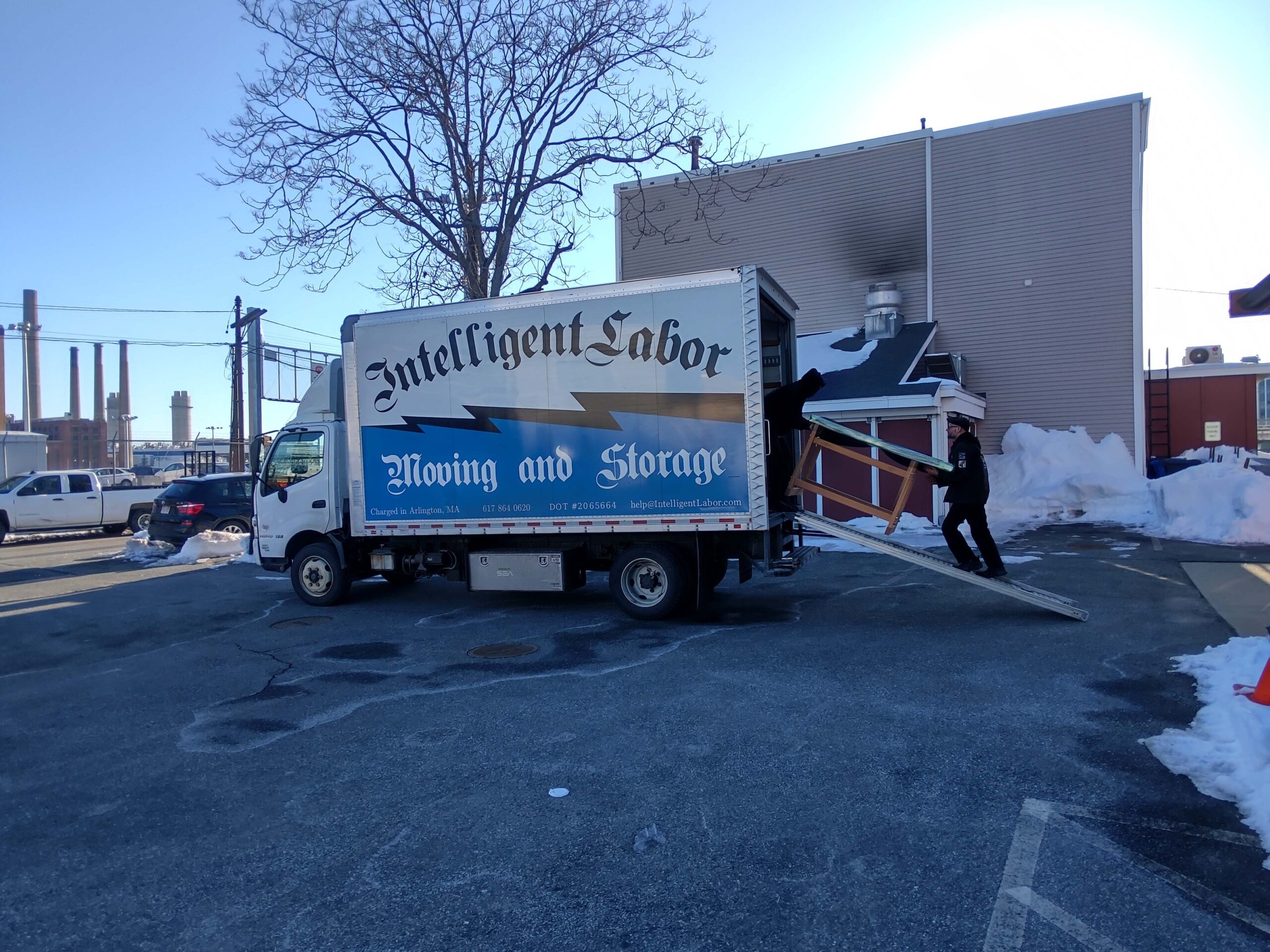
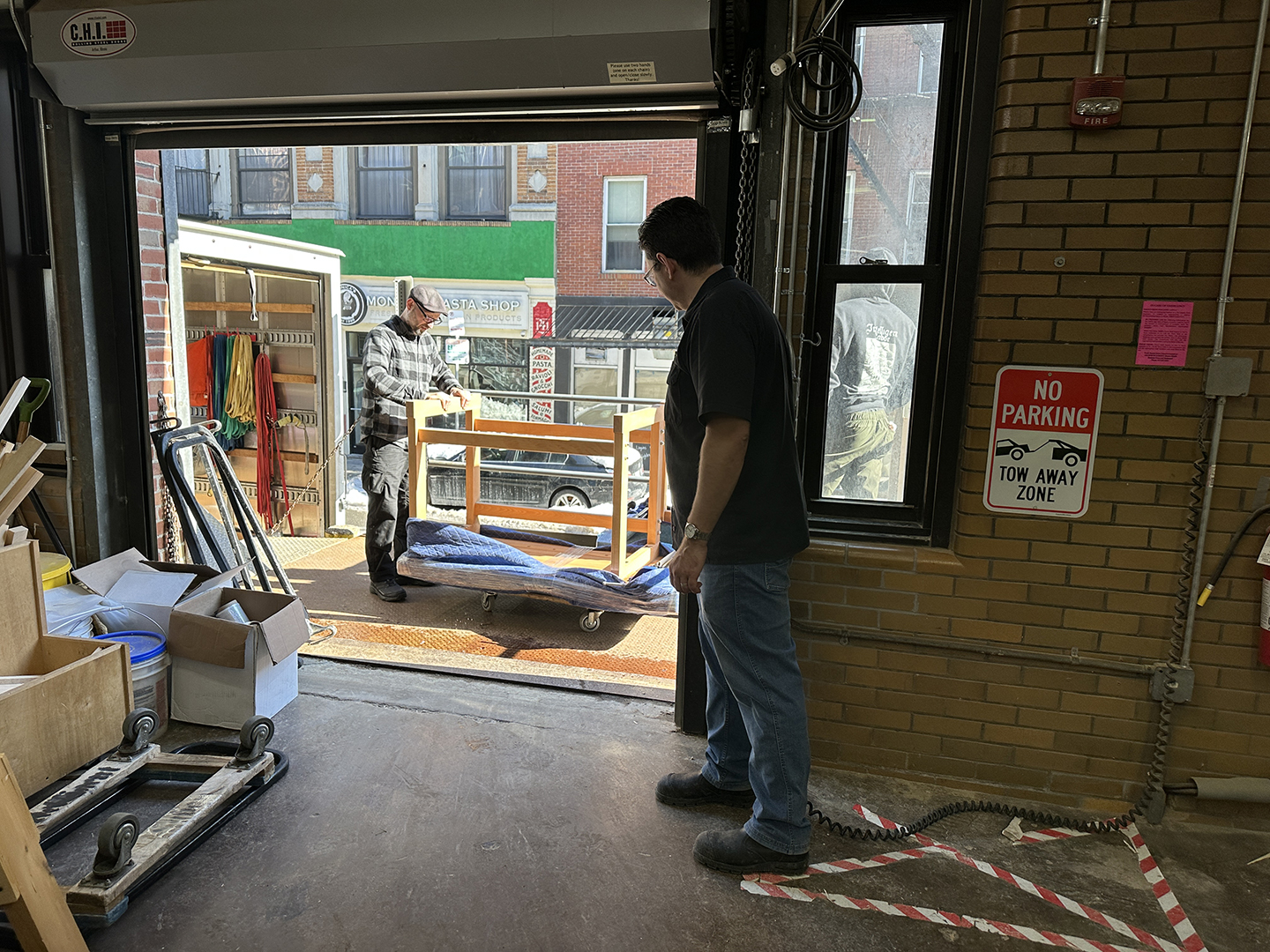
After the workbenches were completed in the Charlestown shop, they were transported to NBSS by Intelligent Labor & Moving, an Arlington-based company that uses fully-electric trucks and minimal plastic wrapping. From sourcing to delivery, these are seriously sustainable workbenches.
Reliable companions for the future
While the benches delivered to NBSS are in pristine condition, that won’t last for long—which is intentional. They will be dented, dinged, and scraped for decades to come. “That’s part of the life of a bench,” Bob reflects. “I look at the benches that have been in the school for 50 years, and I see it as a history of the work that has been produced on it. I love seeing students use them.”
Workbenches might not garner the same level of admiration as the fine furniture that is created using them, but they will remain the unsung heroes in projects pursued by generations of students.