Making Better Music

Thanks to a 15-year partnership, NBSS is the primary service provider for acoustic pianos within the Boston Public Schools. Our students gain real-world experience and are paid for their work, while the service remains free to the schools.
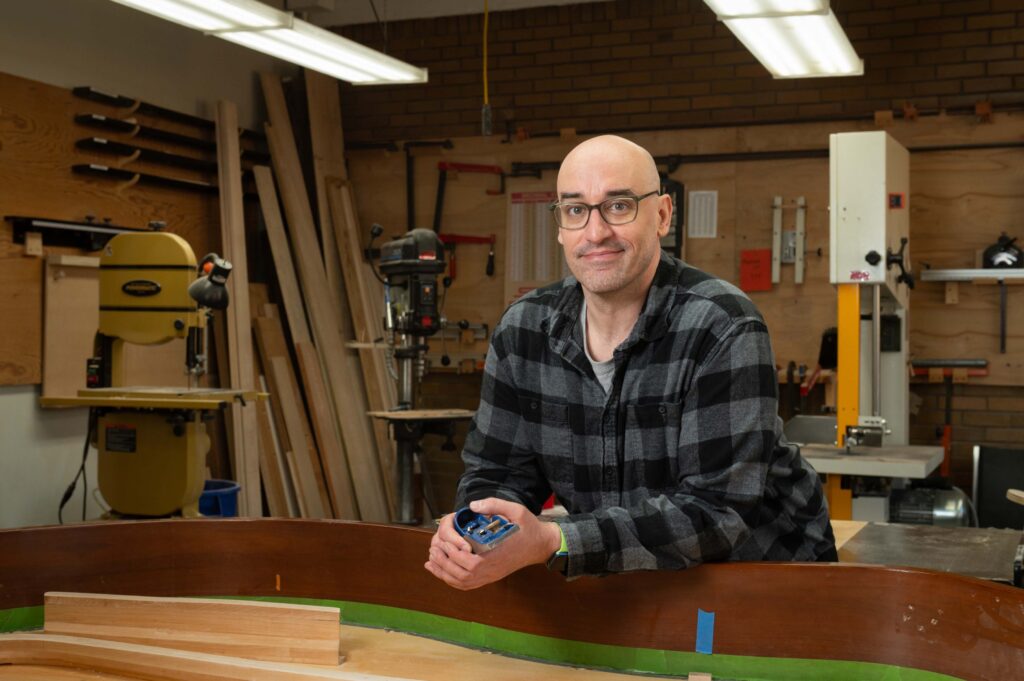
Last fall, Jonathan “Meridian” Clapham PT ’25, PA ’26, an Advanced Piano Technology (PA) student, packed his toolkit and headed to an elementary school in Boston’s Roxbury neighborhood to repair a music teacher’s piano. The opportunity came thanks to a 15-year partnership that has seen North Bennet Street School (NBSS) become the primary service provider for acoustic pianos within the Boston Public Schools (BPS). PA students gain real-world experience and are paid for their work, while the service is free to BPS.
“I arrived and met the music teacher, who was in her first year at the school,” Meridian recalls. “She hadn’t been able to use the piano in her room, so she’d brought in her own electronic keyboard from home to use for classes.”
Right away, Meridian noticed the hammers were blocking against the strings. He started adjusting every note, preparing to repeat the step 88 times. “Luckily, after completing a few notes, I realized the rail, which goes across the whole keyboard, had come loose,” he says. “I got the rail back in place—and suddenly the whole piano was working! The teacher was thrilled, plus it was eye-opening for me because now I always check for a loose rail in upright pianos when hammers are blocking.”
As Meridian was packing up his tools, the music teacher said, “I think I’ll stay late today and just play this piano for a while.”
“That was such a good feeling,” Meridian recalls.
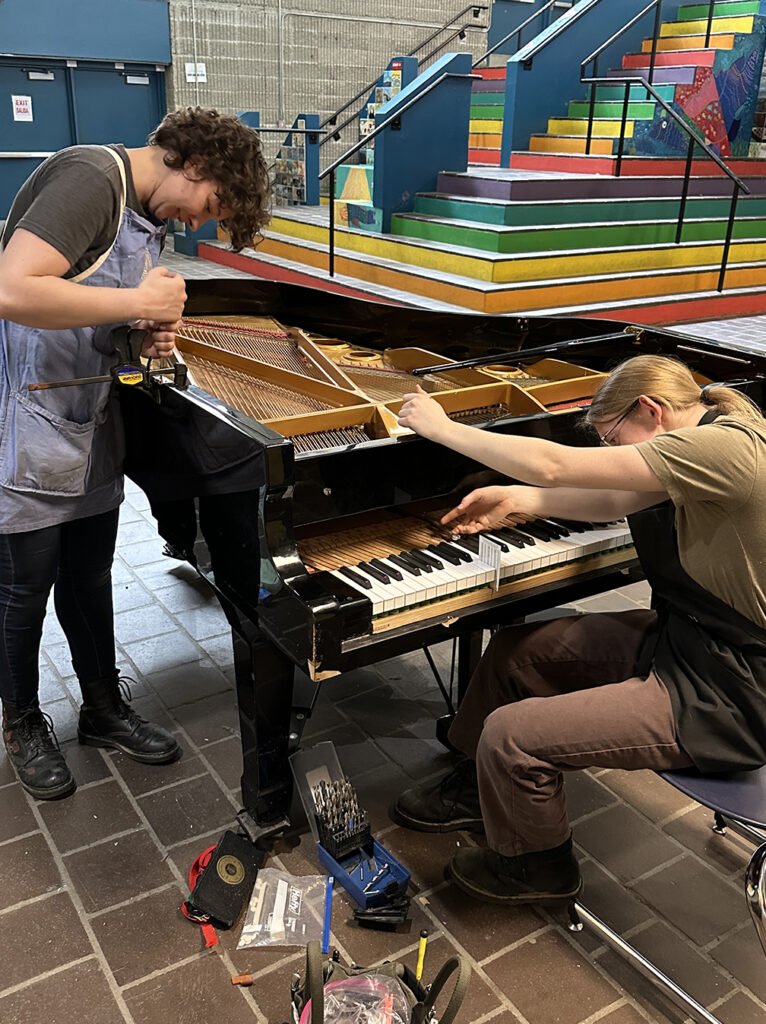
“Our PA students grow in so many directions because of this partnership,” says Emily Townsend PT ’07, PA ’08, Piano Technology Department Head and Advanced Piano Technology Instructor. “Our former Department Head, Debbie Cyr PA ’93, really stewarded this program into what it is today. It used to be donor-funded, and when that funding ended, Debbie problem-solved and folded it into our own departmental budget so it could continue.”
Last year, PA students serviced more than 65 pianos in BPS classrooms, practice rooms, and auditoriums. Tuning is the most requested need, but students also repair keys, pedals, broken strings, hammers, wheels, casters, and more. They handle outreach, confirm appointments, perform the service, and generate an invoice to submit to Emily for processing. After each visit, students share what they learned with the rest of their class.
“Every tuning job is different, and we get a new lesson each time,” shares another student Kara Vinchoff PT ’25, PA ’26, who performed half a dozen site visits over the course of the year. “The BPS tunings are really the first time we’re reaching out to a client and going into the big world with only our toolkits—you never know what you’re going to find. Some of us are taking over businesses or starting fresh after we graduate, and this is exactly what we’ll be doing out in the field.”
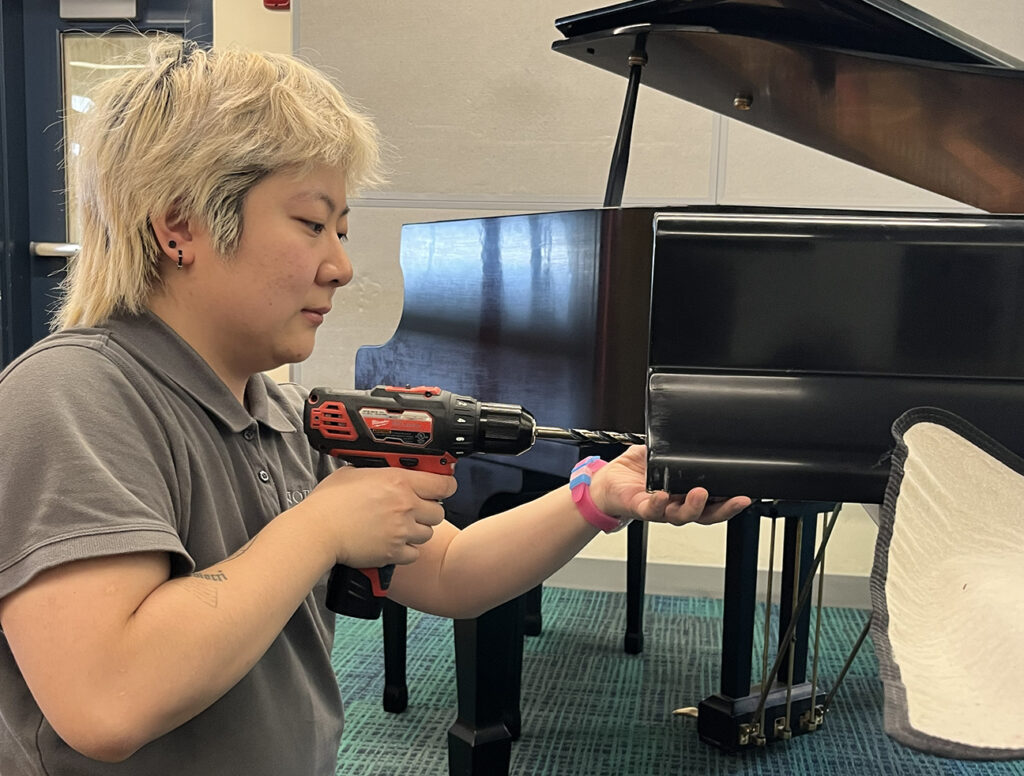
“For BPS, this is an absolutely essential partnership that supports our educational goals and strengthens the equity of arts resources and services across schools,” shares Emmanuel Toledo, Senior Program Director for the BPS Visual and Performing Arts Department. “We have 109 schools in our district, and our teachers are always excited to receive this service—it revitalizes and brings a piano back to how it should sound.”
And a tuned piano can make all the difference in a performance or daily instruction.
“When a piano is out of tune, it is challenging for a student to establish a good tonal center or sing in key,” Emmanuel explains. “A piano that’s well tuned supports the integrity of students’ voices as they’re building key skills for pitch development and vocal quality.”
Beyond their own professional growth, the PA students say it is meaningful to apply their training in the community. “It is so rewarding for us to get these instruments in a working order that can serve a student, rather than be an obstacle to music,” Kara notes. “It’s incredible that NBSS is using its own resources to fund this partnership, and that it lets us contribute to the school system in Boston.”
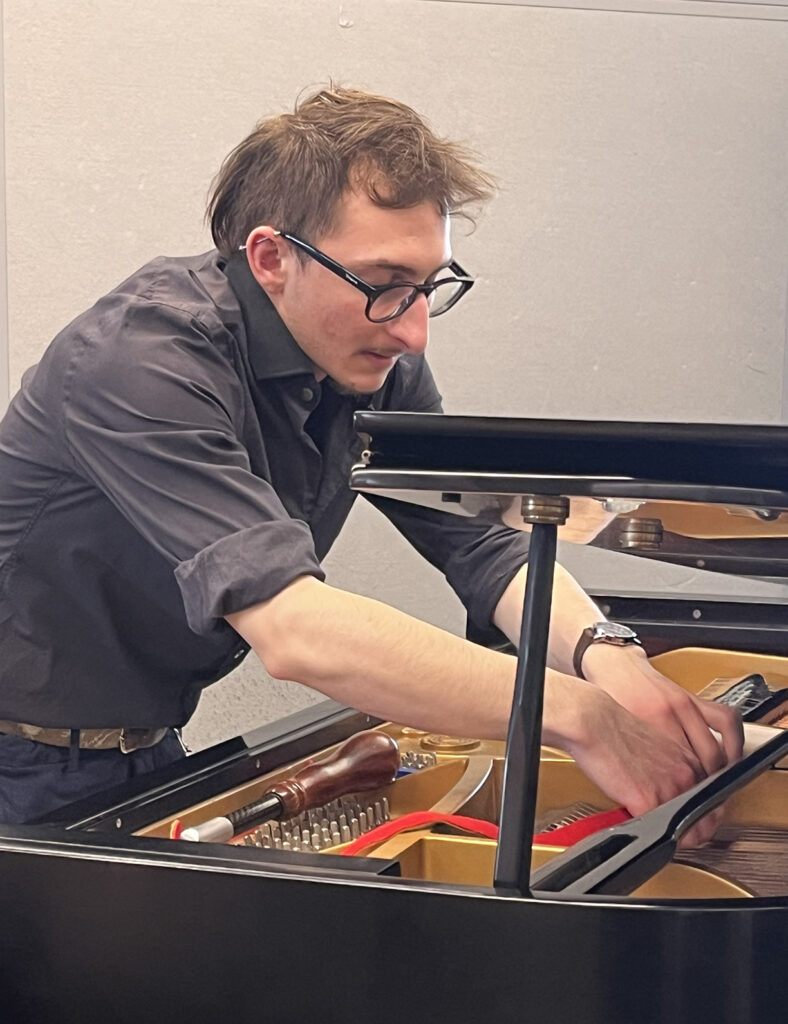
Moving forward, Emily hopes to give students even more service opportunities and expand the program’s reach. “There are lots of nonprofits out there that want to make better music, and within the constraints of my budget, I would love to help with that,” Emily says. So far, the department has partnered with two other community organizations, West End House and ABCD Mattapan Head Start.
“One of the great things about being a piano technician is seeing that light of inspiration when somebody sits down and suddenly realizes how good a piano can sound—it makes them want to make more music,” Emily reflects. “We hope that we do that for the young BPS students, and I know we could do that for other organizations in the community.”
Do you work for a Boston-area nonprofit or community organization and want to participate in our tuning program? Reach out to piano@nbss.edu to connect!
This story is from our Summer 2026 issue of Benchmarks magazine. Read more stories from the issue or view past issues.

