40 Years of Preservation Carpentry at NBSS

Building a Preservation Carpentry Program that Endures
How experts in historic structures that are built to last also crafted a preservation carpentry program that has thrived for 40 years and counting
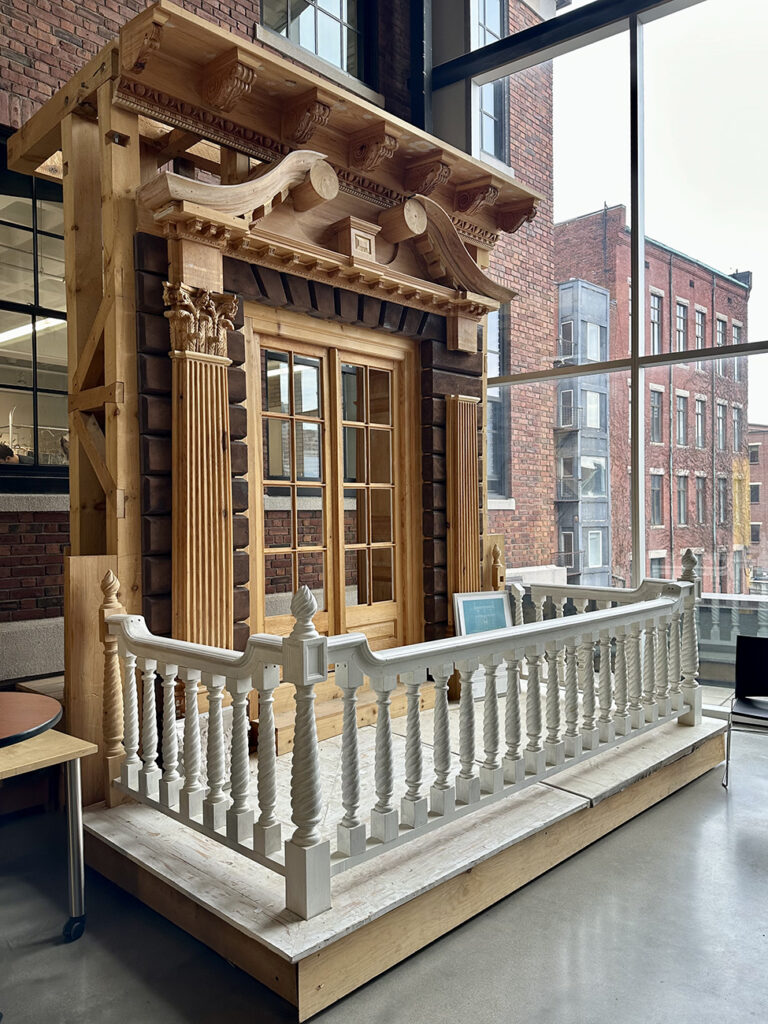
In the 1860s, Boston residents were outraged to learn that the historic former home of John Hancock was set to be demolished. A campaign spread to save the granite mansion on Boston Common, ultimately sparking a preservation movement. Despite protests, the mansion was torn down in 1863. But not before some artifacts were saved—including its 12-panel front door.
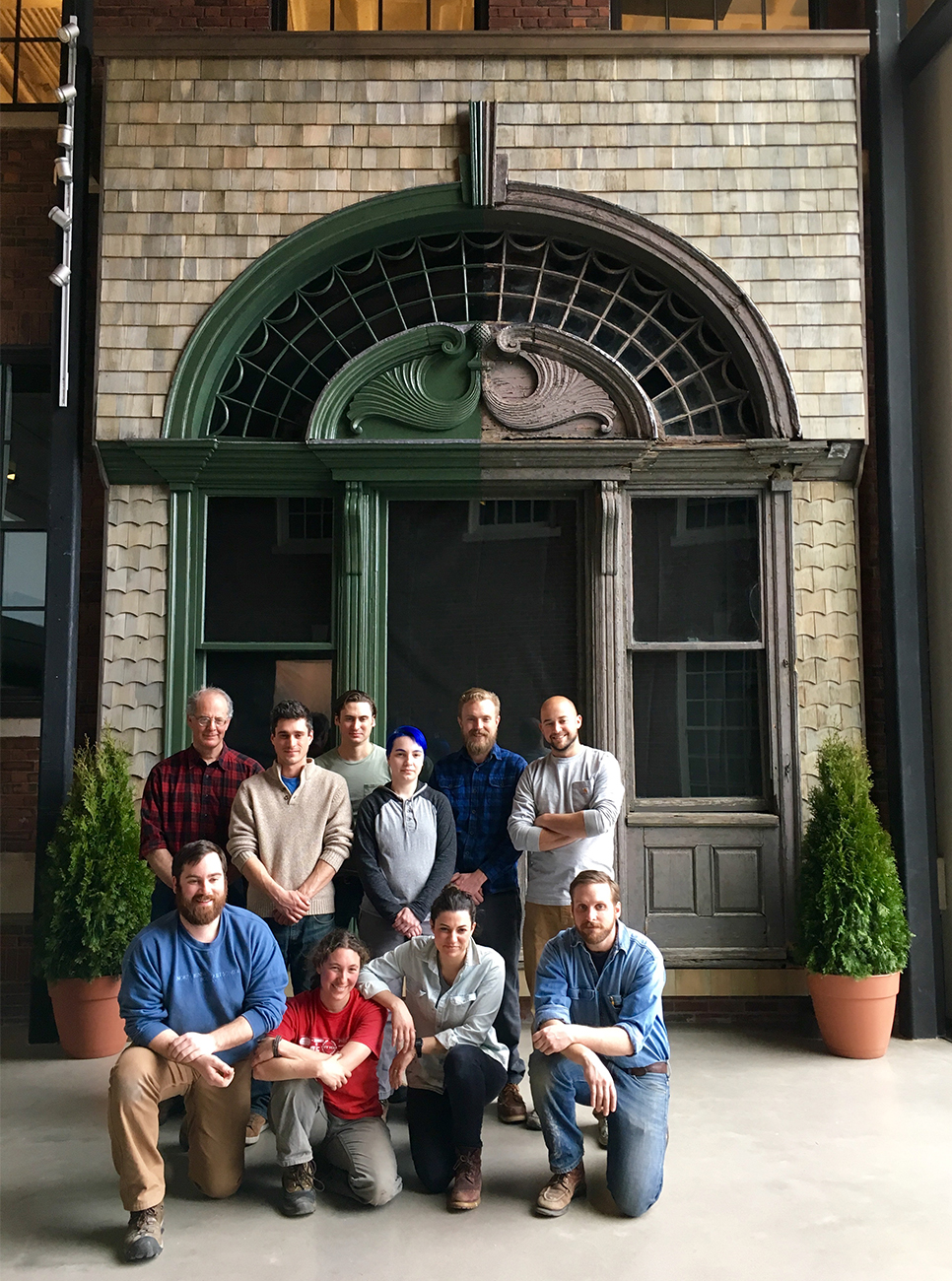
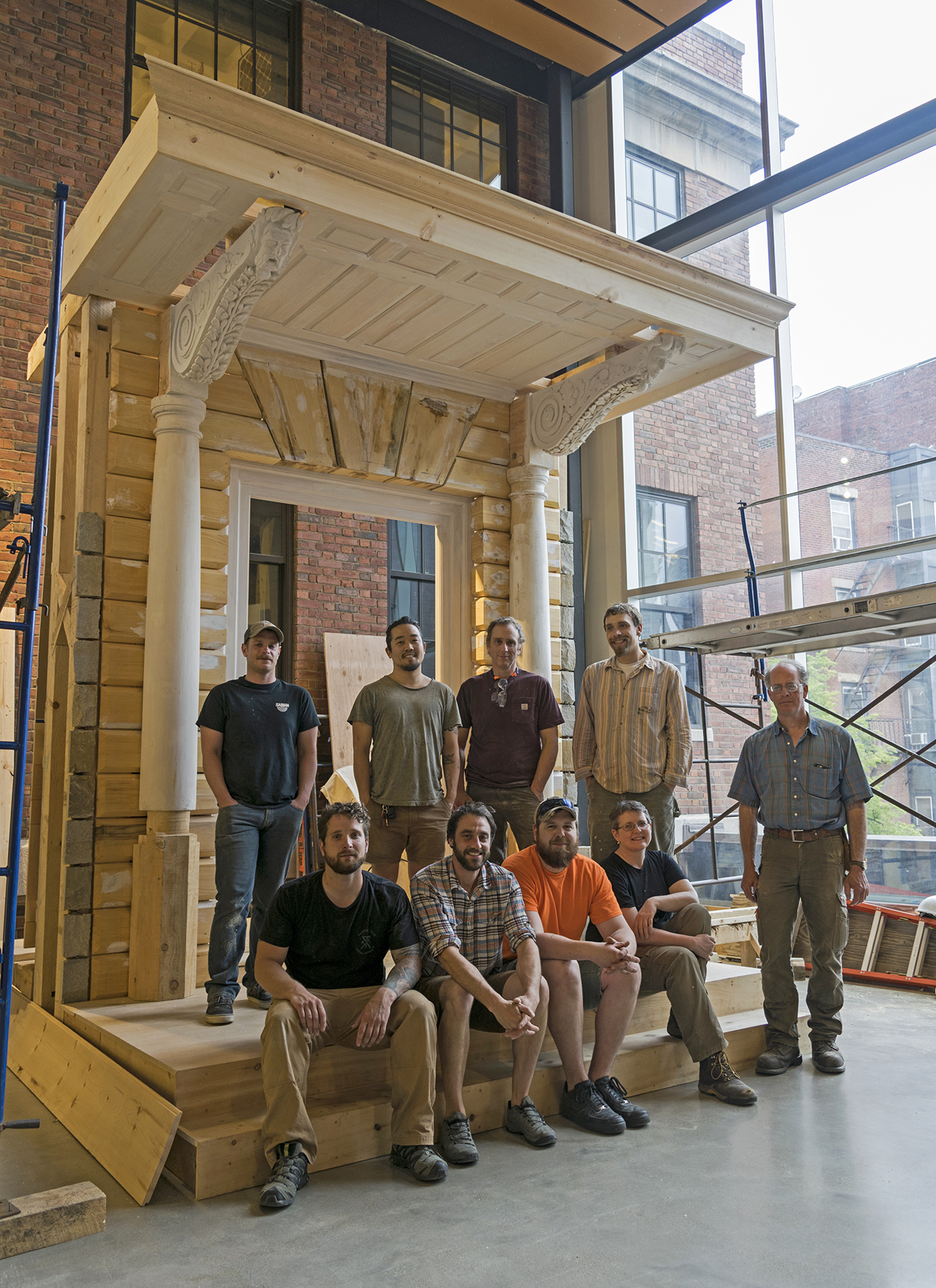
More than 150 years later, the Preservation Carpentry (PC) program at North Bennet Street School (NBSS) was entrusted as the caretaker of Hancock’s door by local non-profit Revolutionary Spaces. This February, the PC program will unveil an updated, full-scale reproduction of that entryway and two-story surround as part of a joint NBSS exhibition, “40 Years of Bookbinding and Preservation Carpentry,” running from February 12 to April 10, 2026.
The latest reproduction, a continuation of an ongoing project, is a fitting centerpiece for the anniversary celebration, says PC Department Head Steven O’Shaughnessy PC ’99: “This magnificent door that we now steward goes to the heart of what our program founder, Robert Adam, wanted to do—train craftspeople to restore and preserve our heritage in architecture.”
Crafting the curriculum
“This is still Robert’s program—he got it right from the beginning,” says Steven, who trained under Robert as a student and worked for Historic New England before returning to NBSS to teach. “We always want to improve the student experience and stay tuned in to feedback from employers and our Advisors, but we also don’t want to fix what’s not broken.”
An experienced woodworker and cabinetmaker, Robert was first hired at NBSS in 1982 as a Carpentry Instructor. He previously taught a pilot program at Nashoba Valley Technical School to train high school students in historic restoration. In 1985, he proposed the idea of starting a preservation carpentry program at NBSS.
“I did a lot of research with various craftspeople and organisations, including the National Park Service, Historic Eastfield Village, Society for the Preservation of New England Antiquities (now Historic New England), and the National Trust,” Robert recalls. “What I concluded was that in order to be successful, we’ve got to have a curriculum, and we’ve got to stick to that curriculum. The failure of previous preservation skills programs was using a specific site to dictate what skills were taught. For our program, site work would instead be driven by the curriculum.”
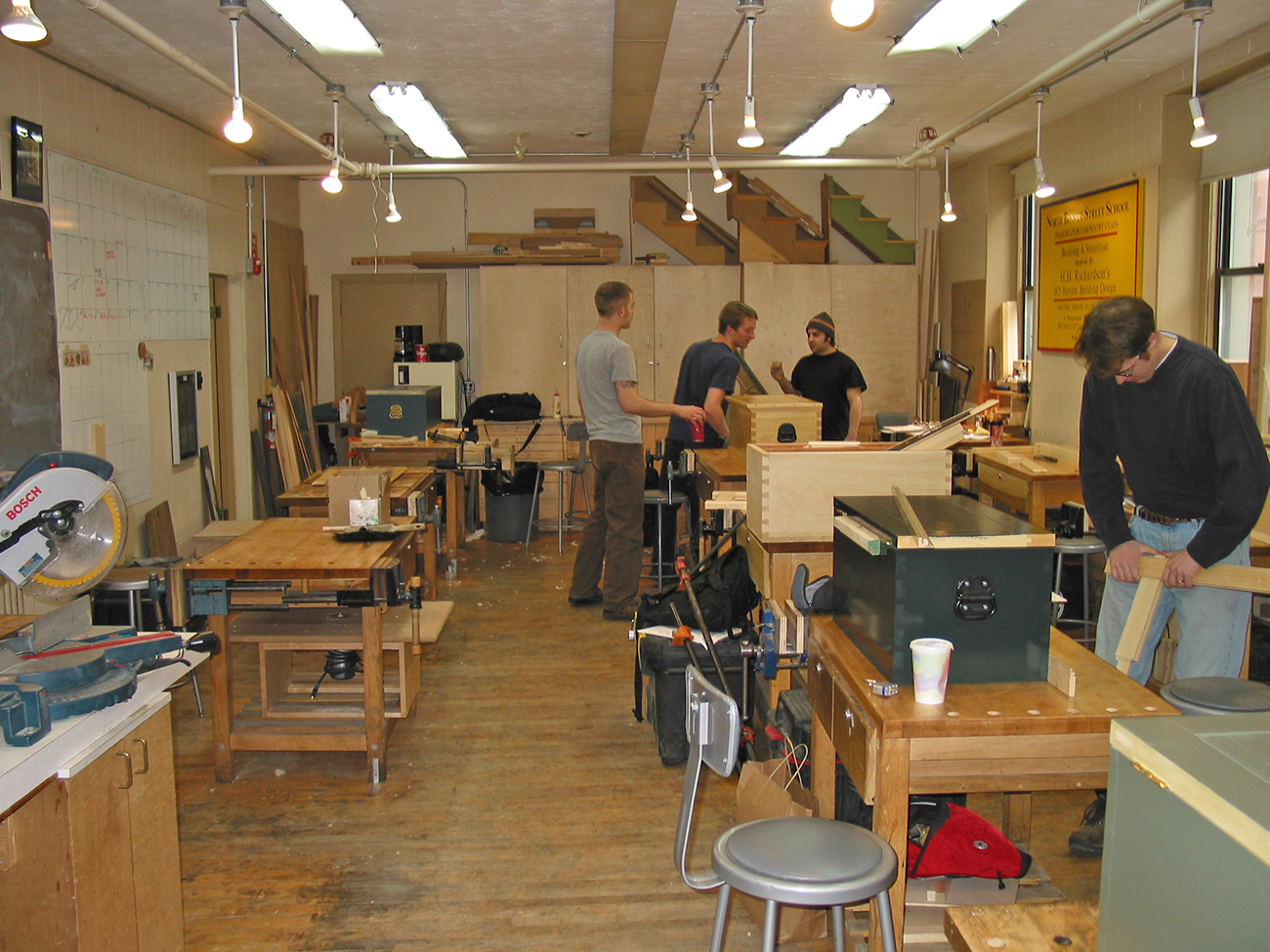
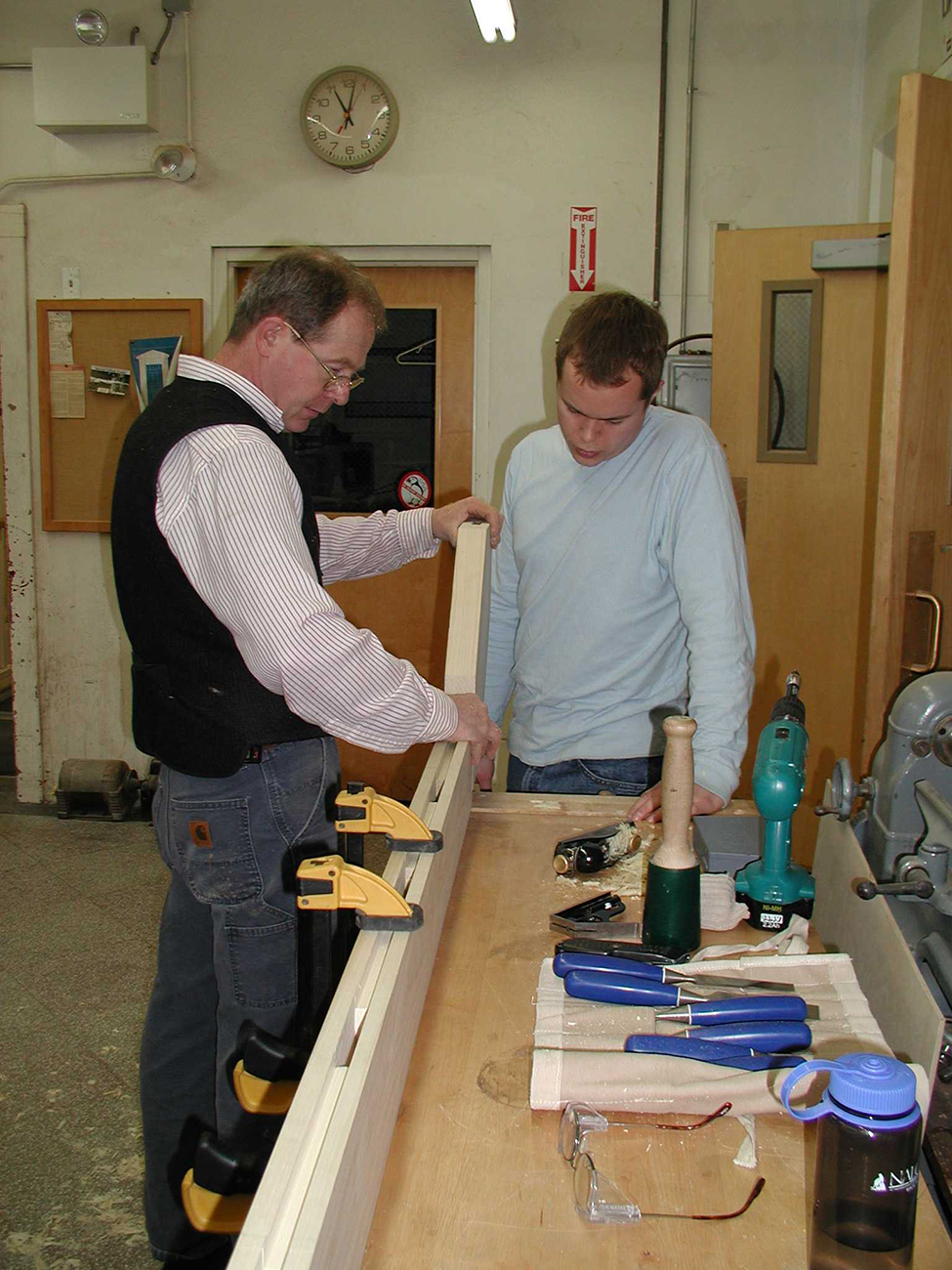
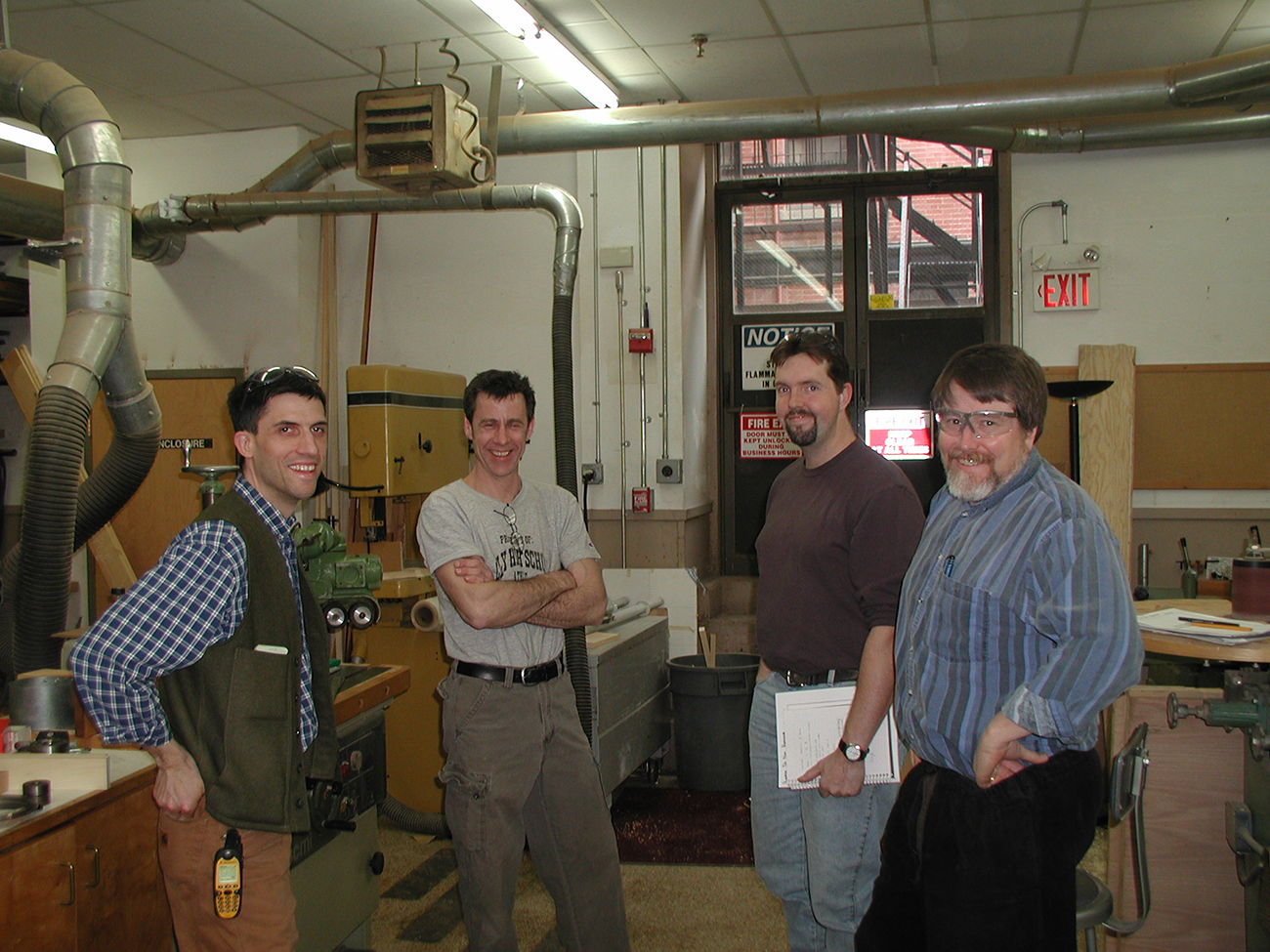
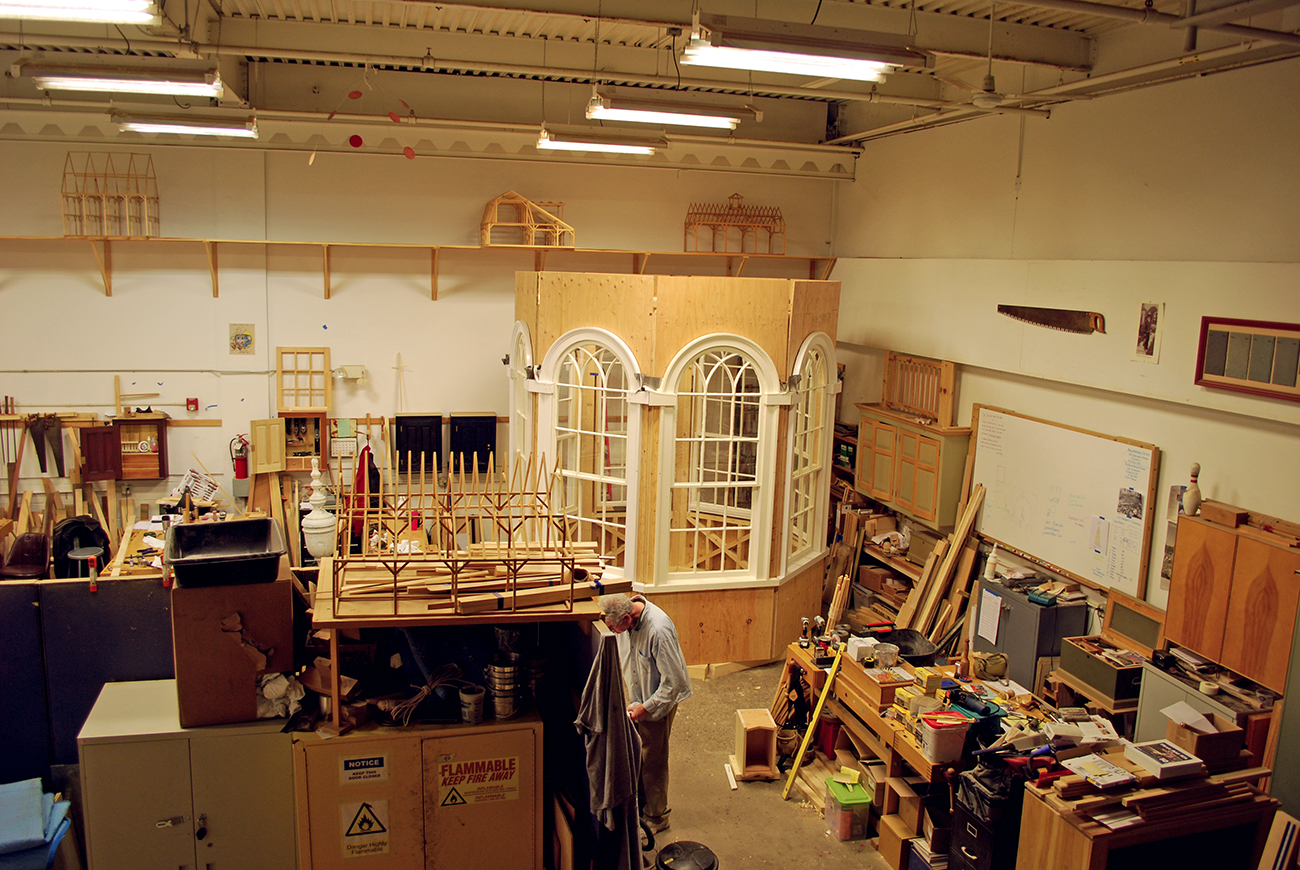
Initially designed as a one-year training for experienced carpenters, Robert quickly realized the program needed a second year: “I ended up doing a lot of unteaching of bad habits.” Very quickly, he adapted to start at the beginning with foundational skills, which also allowed students with little or no prior experience to apply.
With the program’s expansion, former Carpentry Instructor Denis Semprebon was hired as the first-year Instructor. This allowed Robert to coordinate hands-on field experience for second-year students, all while never sacrificing the rigorous curriculum.
Robert set to work forging strong relationships between the program and nonprofit organisations across New England, including Old Sturbridge Village, Historic New England, Strawbery Banke, Danvers Historical Society, and the Shirley-Eustis House, as well as many local museums and historical societies.
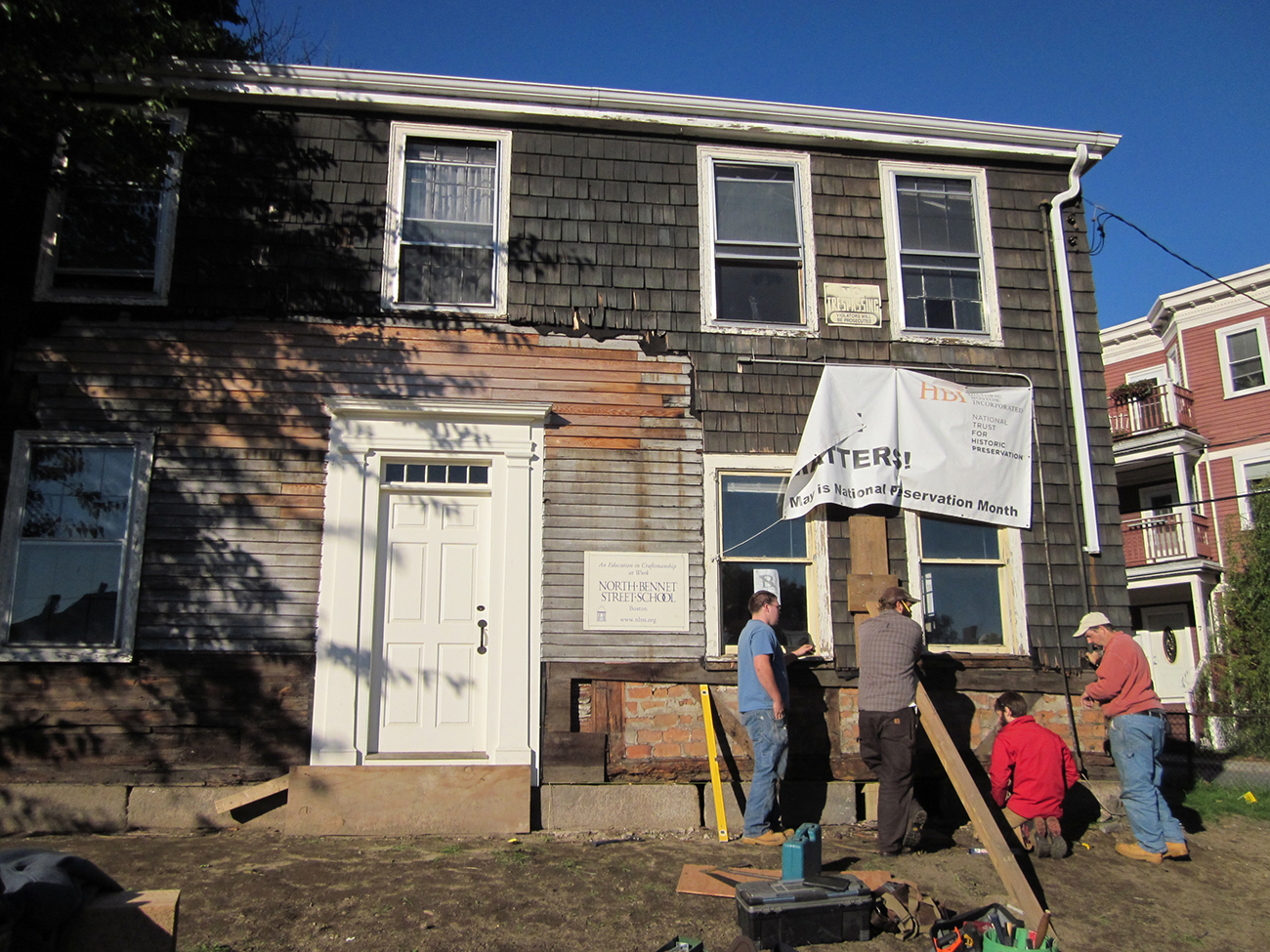
In the beginning, the School’s own Shaw House, built circa 1828, was not only the program’s home but also a perfect preservation project. Students restored the building, including replacing floor joists and flooring, exterior and interior doors, plaster walls and ceilings, and more, according to “Rewarding Work: A History of Boston’s North Bennet Street School” by Christine Compston, Stephen Senge, and Walter McDonald.
In 2008, Robert retired from teaching and passed leadership of the program off to his first-year Instructor and former student, Steven, but has remained on as an Advisor, as has Denis. “All these years of teaching for me have been an education,” Robert reflects. “It was great to be an educator—and be educated.”
A foundation to build on
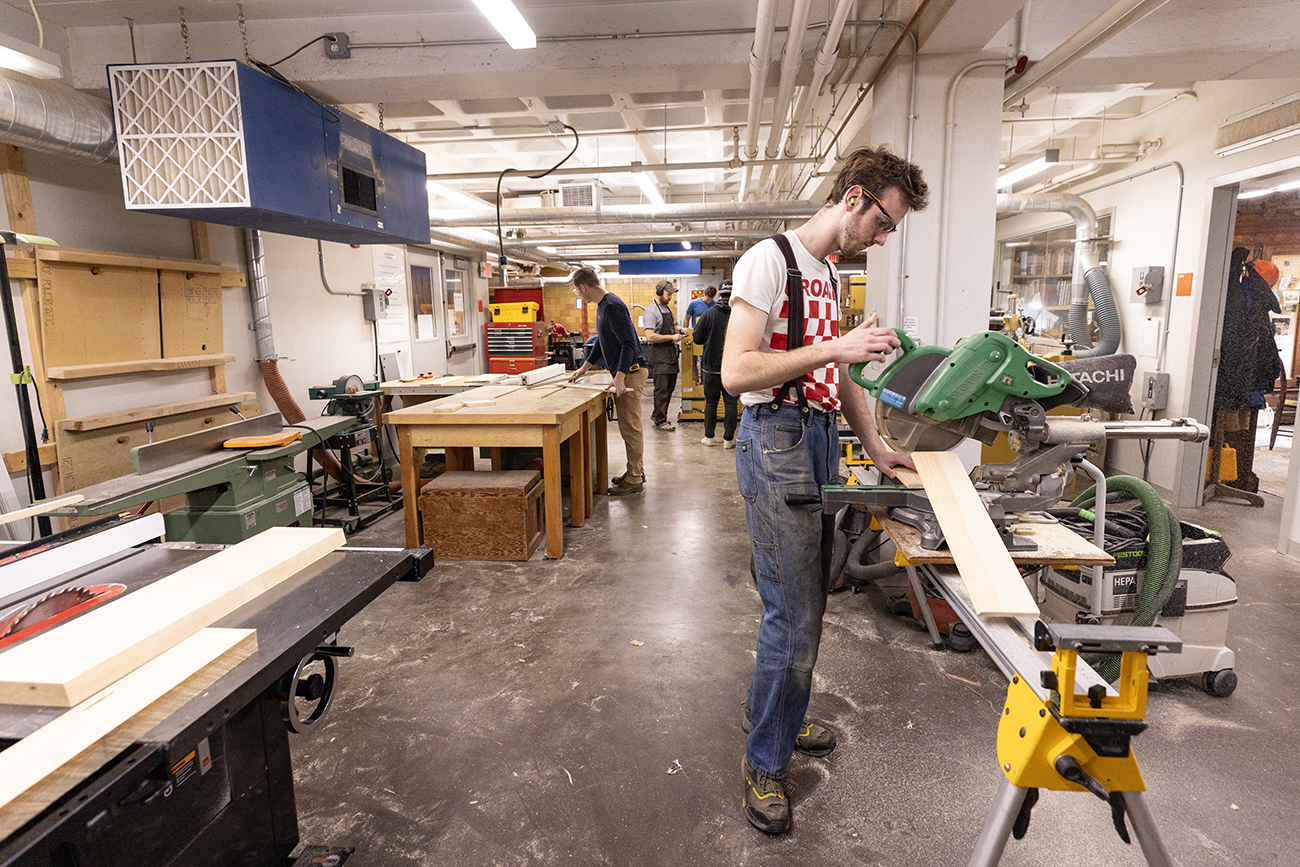
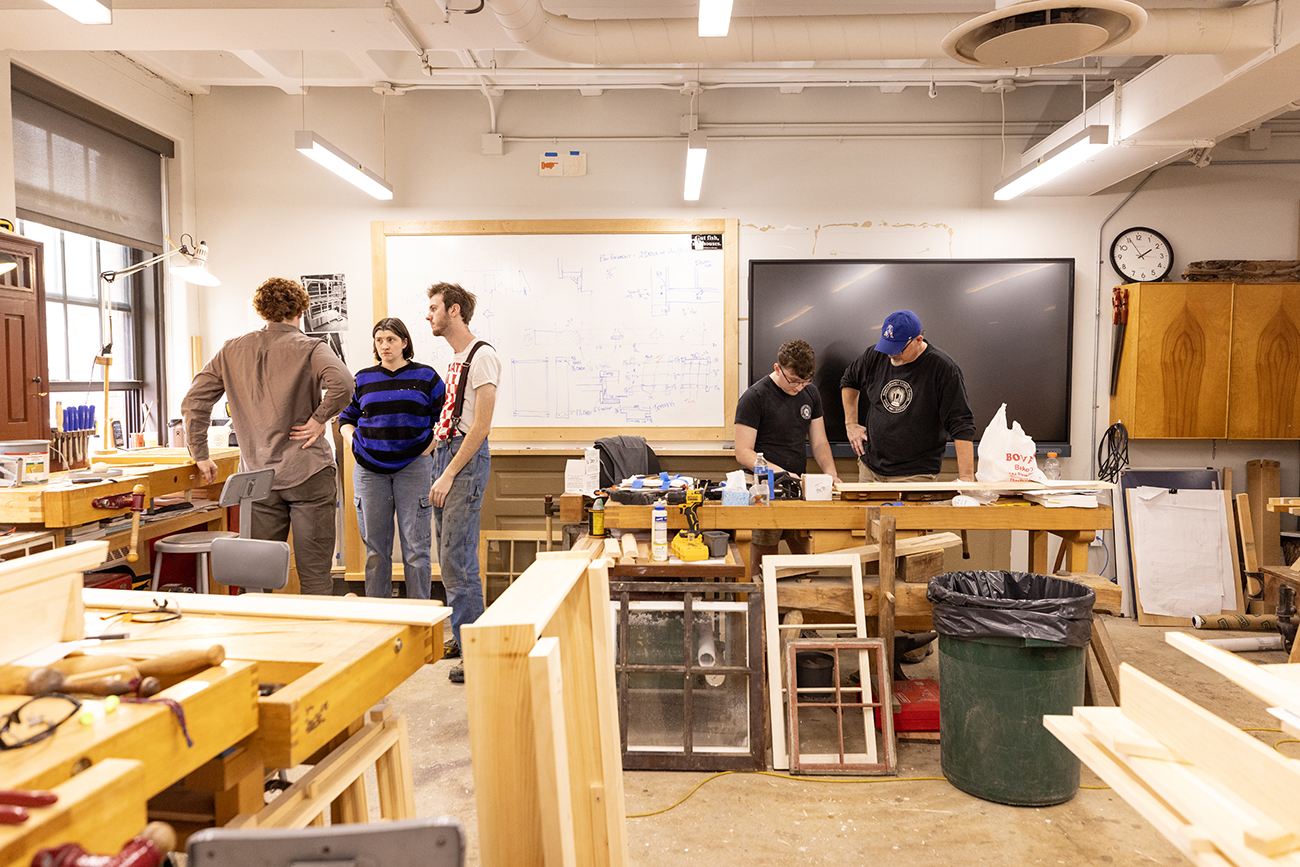
“Our program is a jam-packed version of the centuries-old European tradition of seven-year apprenticeships,” Steven says. In two years, PC students learn the core skills involved in the construction, preservation, and restoration of pre-20th-century New England homes, combined with an introduction to modern-day residential construction.
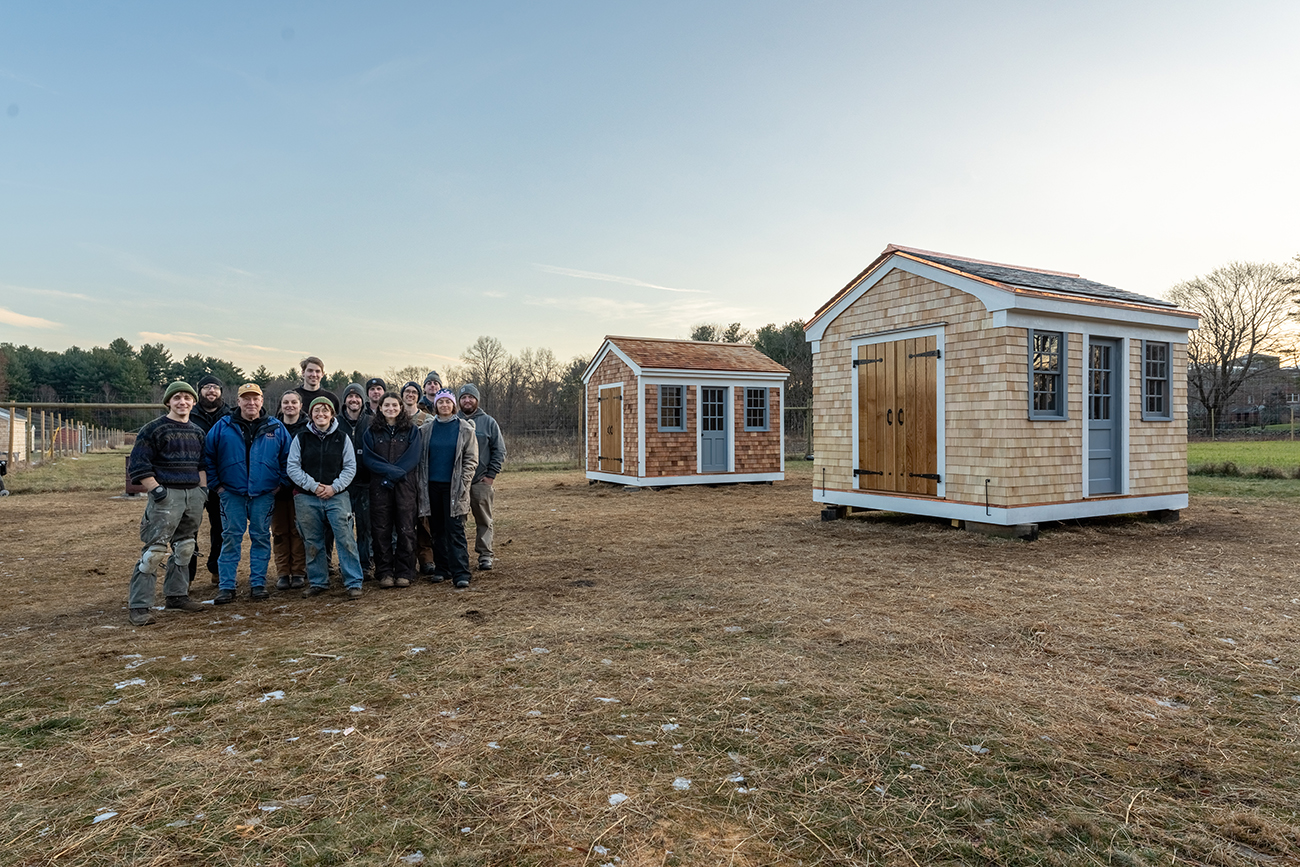
The program provides opportunities for students to use their skills on community projects, like the 2012 renovation of an 18th-century barn at Brookwood Farm in Canton, Massachusetts, where students continue to hone their skills. “A venue like Brookwood Farm allows us to teach in a way that fits our curriculum,” Steven says.
With such a solid curriculum in place, the program can leverage its world-class staff to weave in other specialized skills and educational experiences.
“We call ourselves Preservation Carpentry, but we do a fair bit more than that,” Steven notes. “We respect all that goes into these handmade houses, and when we’re working as carpenters on historic buildings, we also need to protect the plaster, masonry, and more.”
For example, Steven notes, second-year Instructor Michael Burrey has helped pave the way for students to visit the island of Nantucket, where there is a high concentration of 18th-century houses, to study specialized skills like lime plastering, a traditional technique that combines lime, sand, water, and animal hair or other fibers.
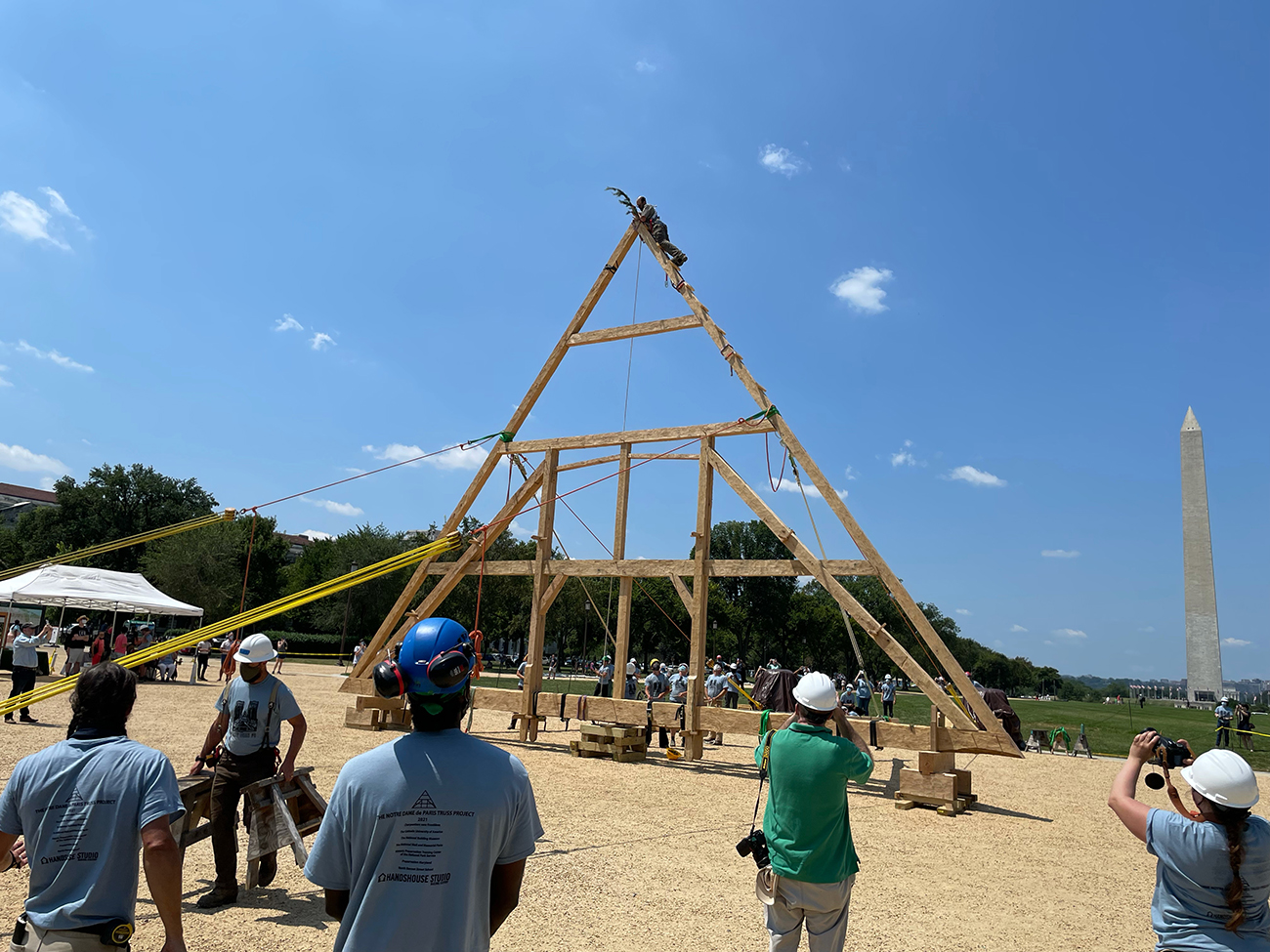
A timber framing specialist and expert in 17th-century building techniques, Michael made headlines in 2024 when he was tapped to assist with the restoration of France’s Notre Dame Cathedral. Michael says a treasured memory from a few years prior was announcing to NBSS students that they had the opportunity to go to Washington, D.C., to reconstruct a model of Notre Dame’s truss number six. “That was a big, emotional moment,” Michael recalls.
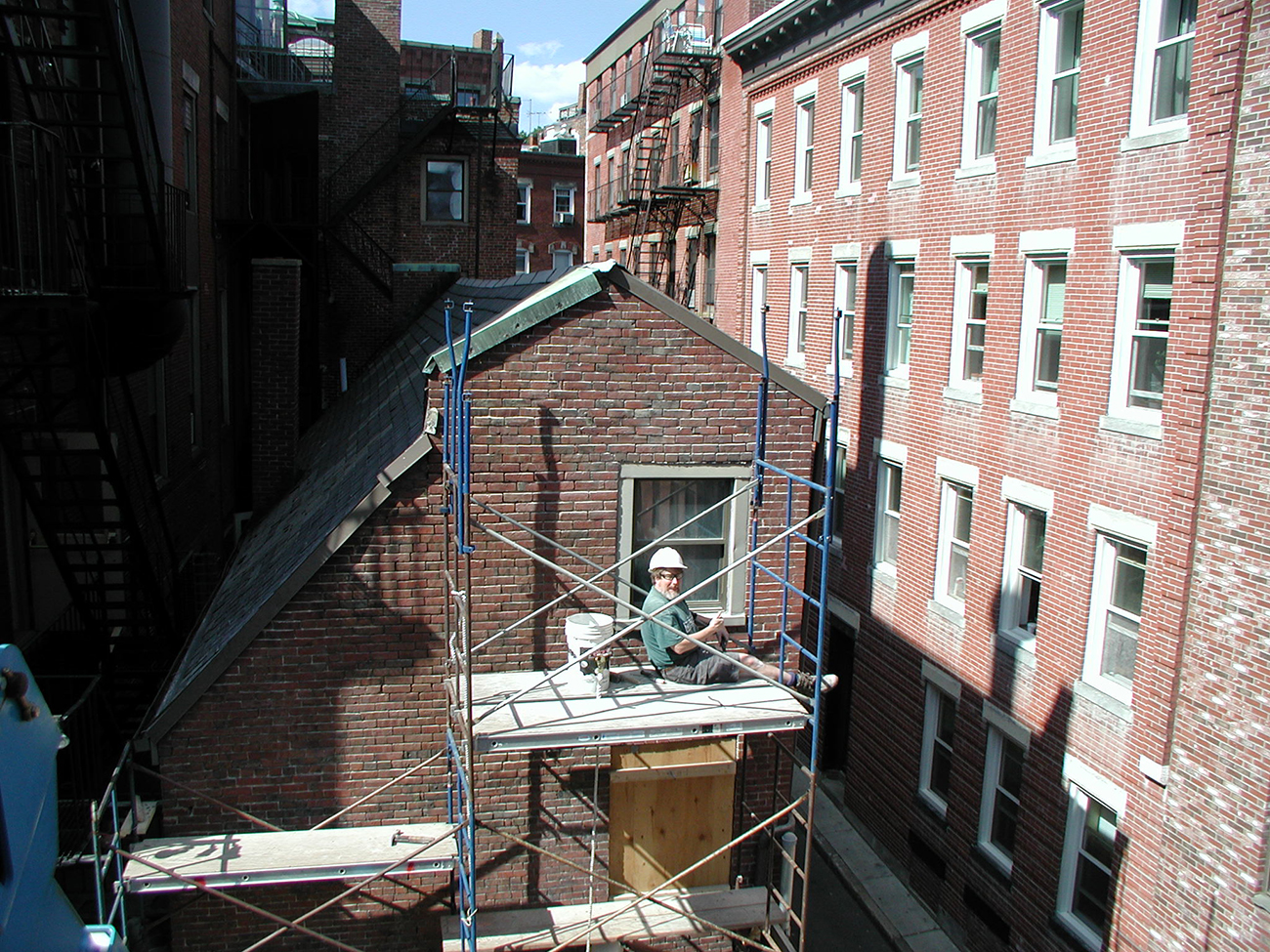
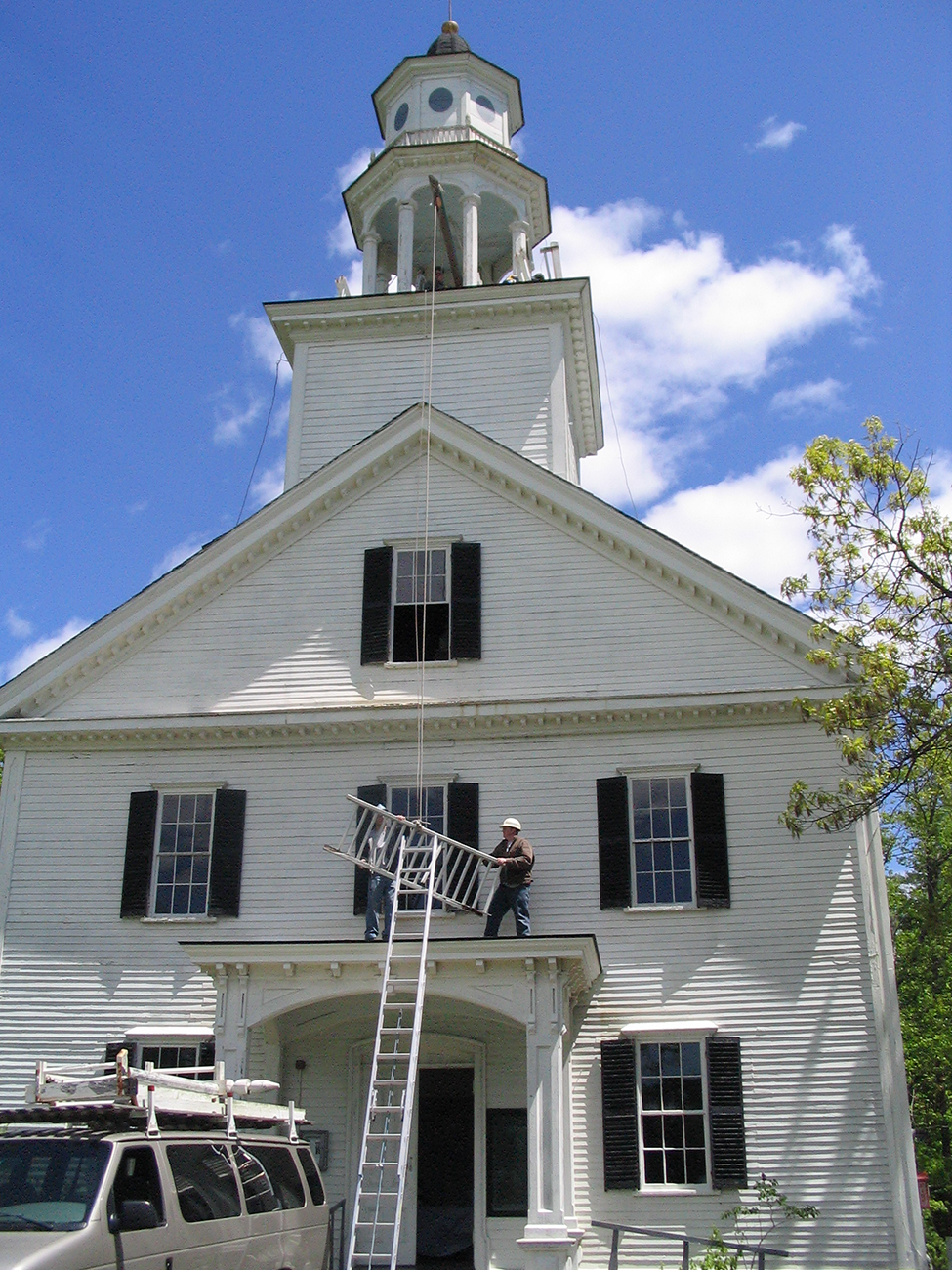
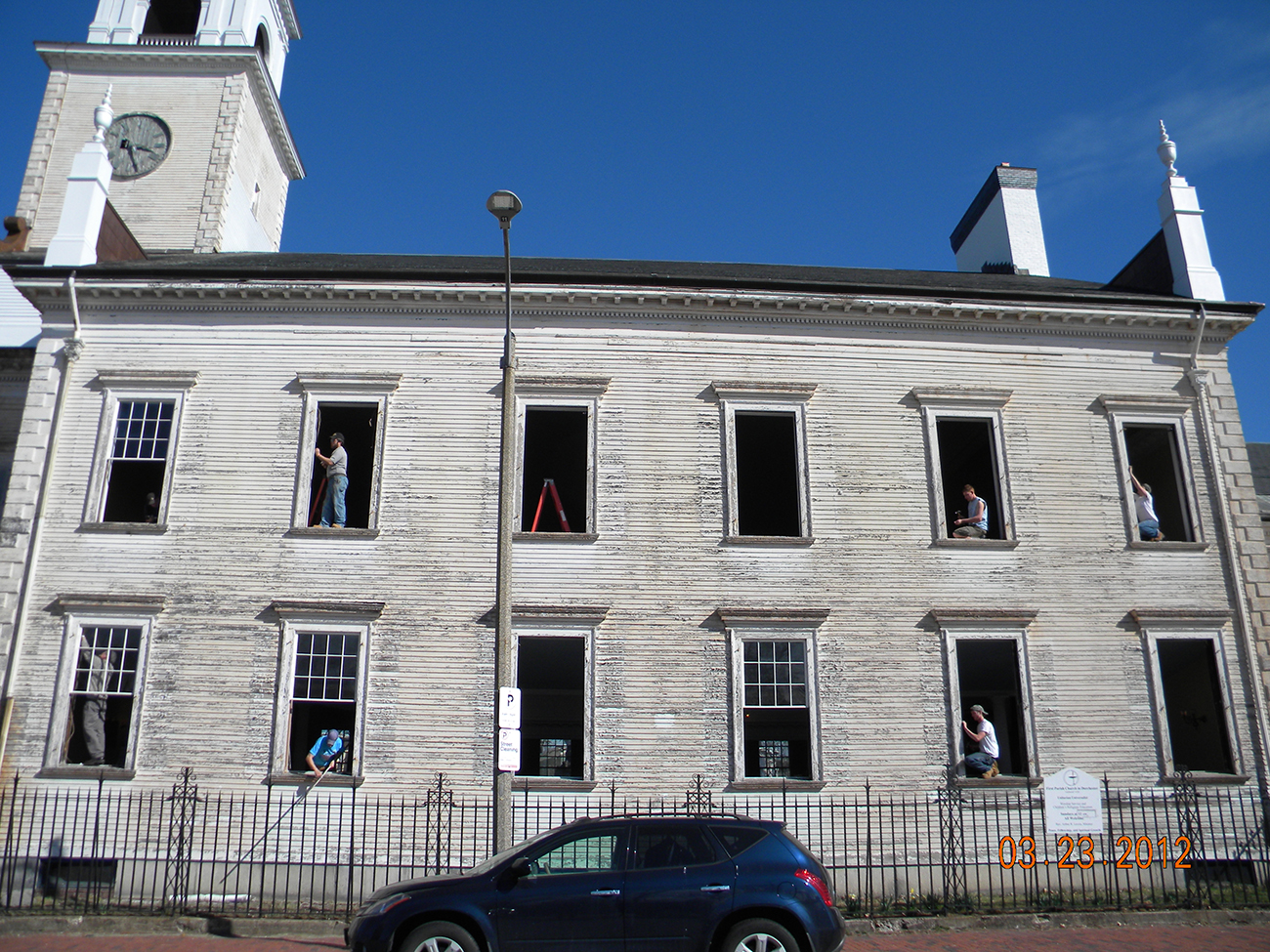
Projects Through the Years
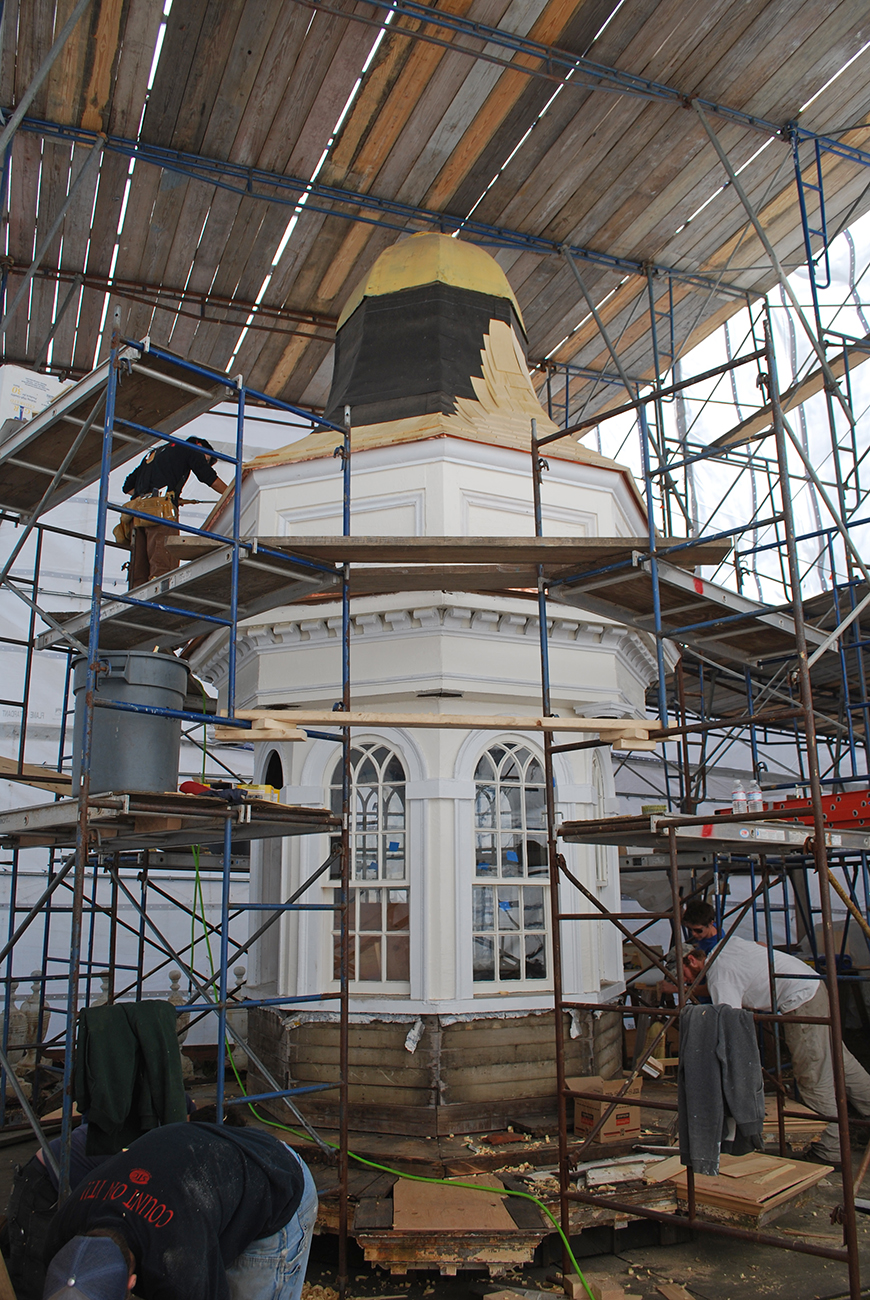
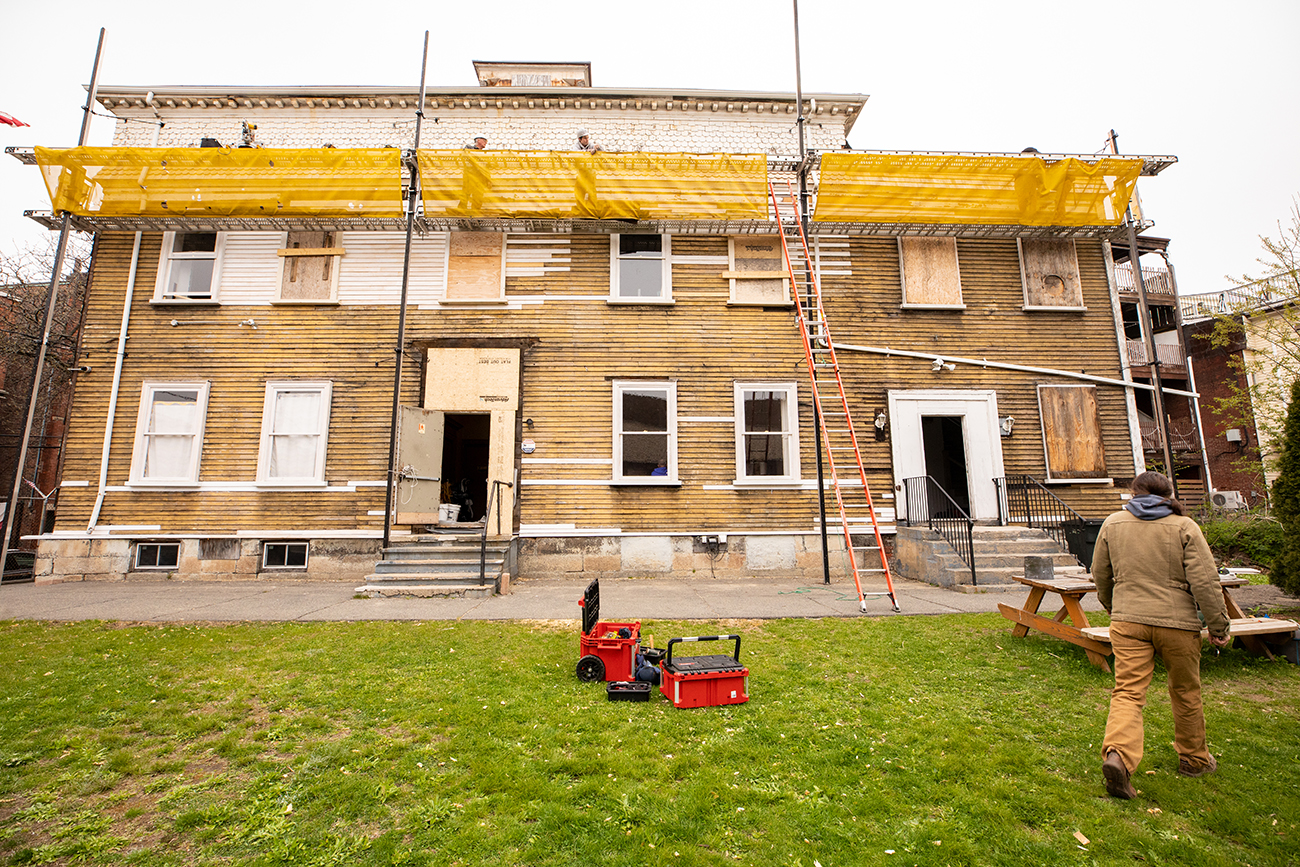
Advisory brings expert mentorship
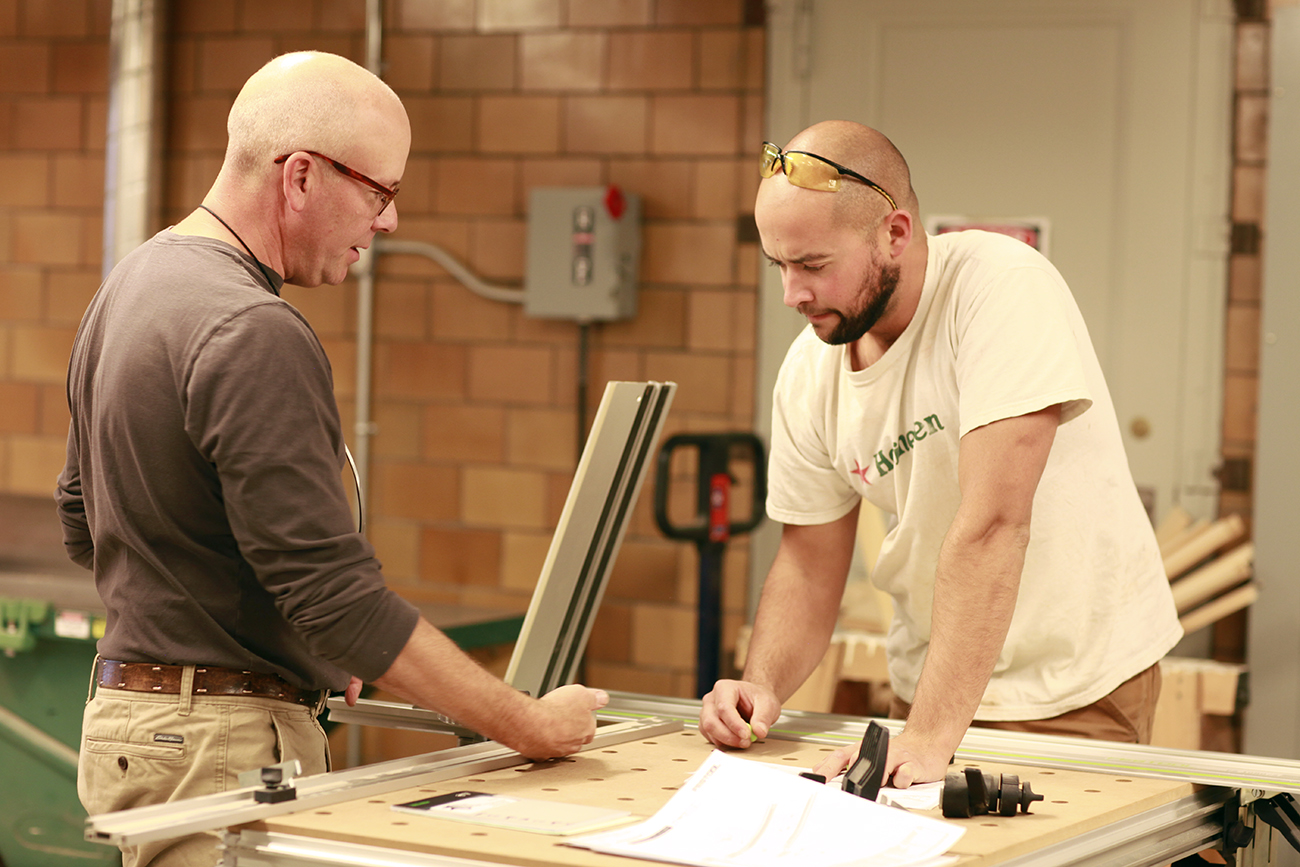
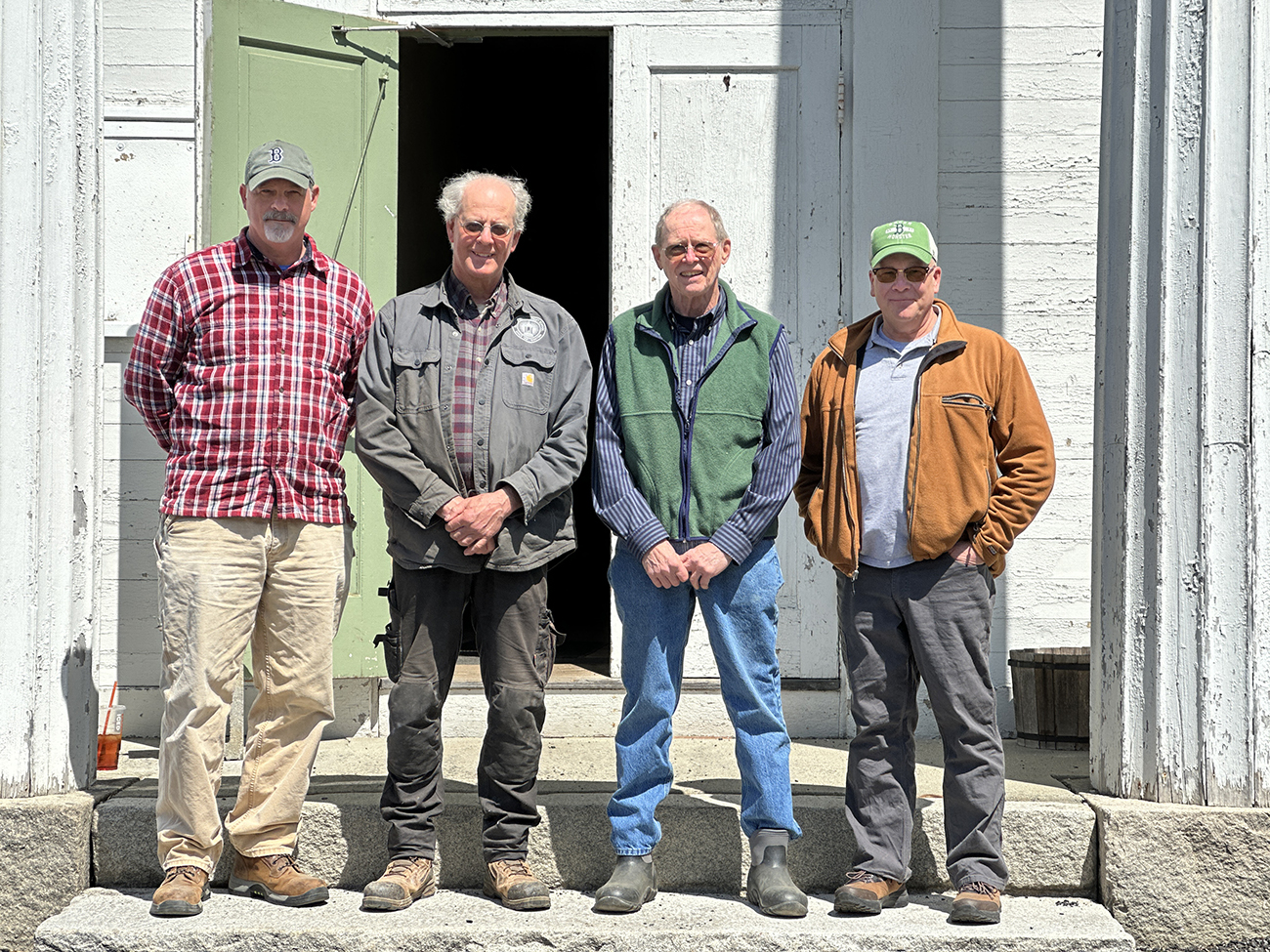
In a field so steeped in mentorship, the program’s Advisors are key. They hold a shared respect for tradition and ensure the curriculum matches the current landscape.
Lee Noel Chase PC ’94, principal of Chase Design Services, became an Advisor in 2025, continuing the legacy of her late mother and former NBSS Advisor Sara B. Chase, a preservation consultant for over 40 years, specializing in masonry rehabilitation and repair as well as historic paint analysis. “We lost a world-class national treasure in Sara,” Steven shares. “Now, we’re so fortunate that her daughter, Lee Noel, has joined our Advisory team.”
“Whether my mom was working with the team at the Old State House or a small town hall, she could lead people through that process of learning about the building materials,” Lee Noel shares. “She was a uniquely potent advocate, because she shared the thrill of discovery.”
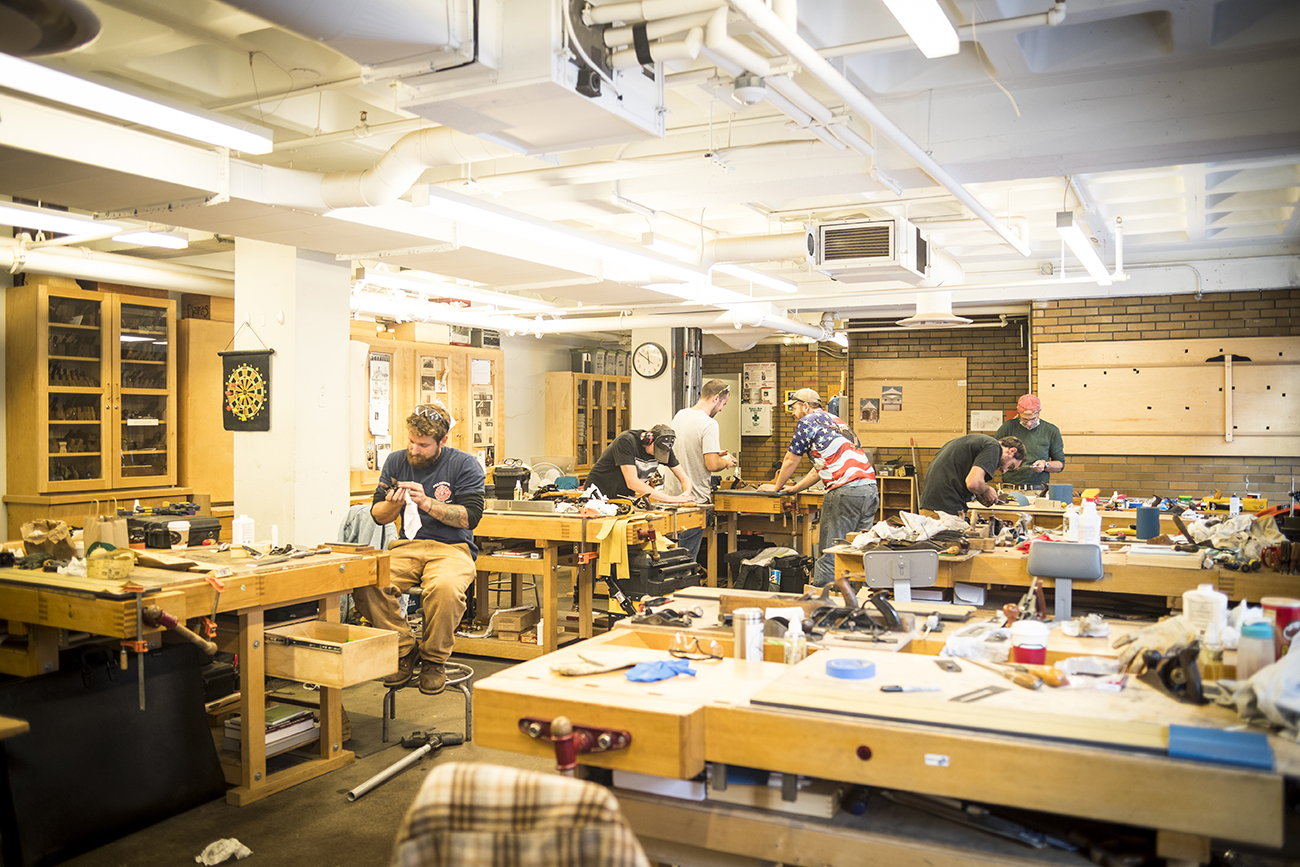
“The Preservation Carpentry program at NBSS teaches real knowledge—the body’s memory of a hand planing technique, an eye that can read the difference between original or altered material, the sound of a timber frame joint sitting properly,” says Lee Noel, who trained at both NBSS and the Boston Architectural College and shares her expertise as a recurring guest lecturer in the PC program.
“That connection to materials and methods is huge for me as I come at architectural design through the eyes of an artisan,” she notes. “If we can have knowledge about materials and methods and then love them in this very real way, through preservation and conservation, then we can communicate that back out into the world.”
And while the field is based in tradition, Lee Noel says, “it actually has new, important discoveries all the time—that is part of the magic of it.”
Guiding future craftspeople
Graduates have gone on to become restoration carpenters, museum conservators, and founders of their own design/build companies. Looking ahead, PC leaders see the program poised to fill a critical need.
Michael says, “There are very few hands-on preservation programs in the U.S., but there is a huge demand for traditional carpenters, masons, and plasterers to maintain churches, houses, museums, etc., and we definitely don’t have enough people out there doing it.”
“Preservation carpentry will endure because it teaches more than repair—it’s teaching context and craft,” Lee Noel notes.
Regardless of what graduates decide to do, they will bring a higher set of standards to their work, thanks to the program, Steven says: “And it will all connect back to the time they allowed us to guide them through becoming craftspeople, and not just builders.”

