40 Years of Bookbinding at NBSS

Binding Together a Lasting Bookbinding Program
The Bookbinding program’s leaders, past and present, share the story of what it takes to develop and sustain a successful bookbinding program for 40 years
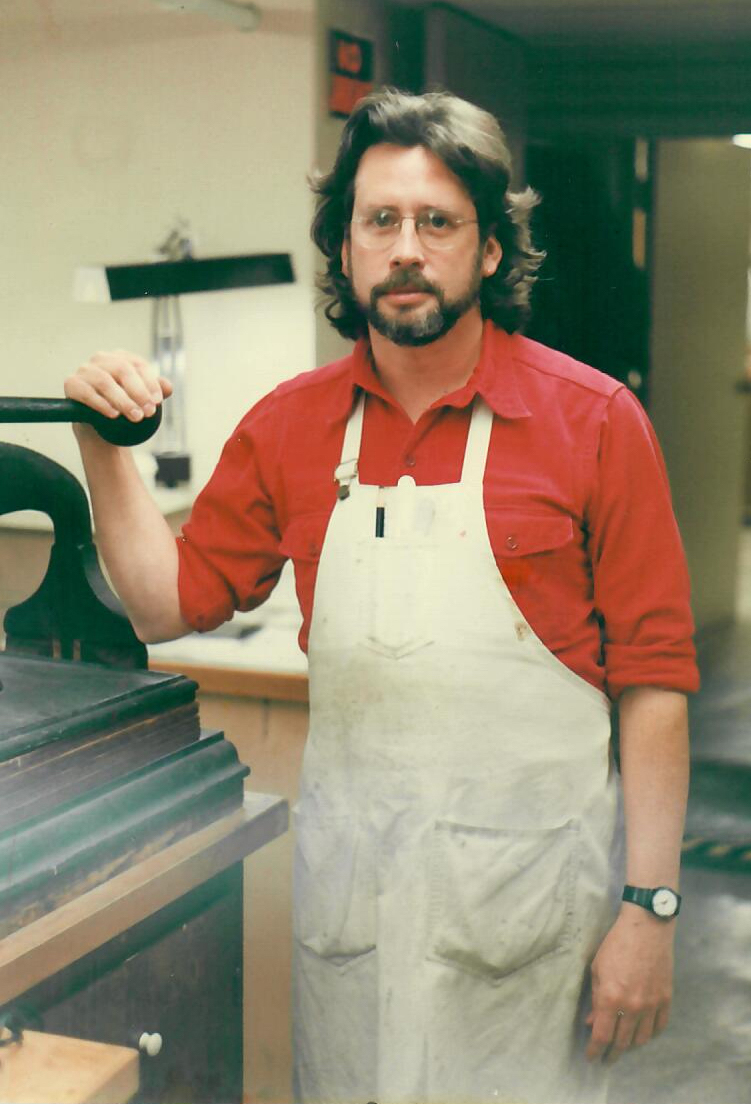
In the spring of 1986, the office phone rang in the Conservation Department at the University of Iowa’s Main Library. William (Bill) Anthony, renowned binder and the university’s first conservator, answered. The caller asked to speak with Bill’s apprentice, Mark Esser—a talented bookbinder who got his start at Harcourt Bindery, the largest bindery in the U.S. dedicated entirely to hand bookbinding.
When Mark picked up the receiver, Walter McDonald, then-Director of Instruction at North Bennet Street School (NBSS), was on the line: NBSS was establishing a Bookbinding program. A local conservator recommended Mark. Would he be interested in applying to be its first instructor?
Feeling apprehensive about moving full-time to teaching, Mark initially declined. Bill urged him to reconsider. “He felt it was an obligation to pass on what I had learned,” Mark says. Mark was hired and went to work developing the School’s Bookbinding (BB) curriculum.
A joint exhibition, “40 Years of Bookbinding and Preservation Carpentry,” running from February 12 to April 10, 2026 at the School, will mark the BB program’s milestone anniversary. Jeff Altepeter BB ’99, current Bookbinding Department Head, says the foundation Mark laid has been a key factor in the program’s strength: “Rooted in historical models, Mark’s core curriculum remains the backbone around which each Instructor has been able to go deeper, remaining nimble without needing to reinvent.”
Prologue to success
Before Walter placed that phone call, the wheels had been in motion for years on establishing an NBSS Bookbinding program.
Walter and his friend Sam Ellenport, then-owner of Harcourt Bindery, first discussed the idea in the late 1970s, according to “Rewarding Work: A History of Boston’s North Bennet Street School” by Christine Compston, Stephen Senge, and Walter McDonald. The authors note that the field of book conservation was on the rise, using methodologies honed out of necessity after the 1966 Arno River flood in Florence, Italy, water-damaged thousands of books.
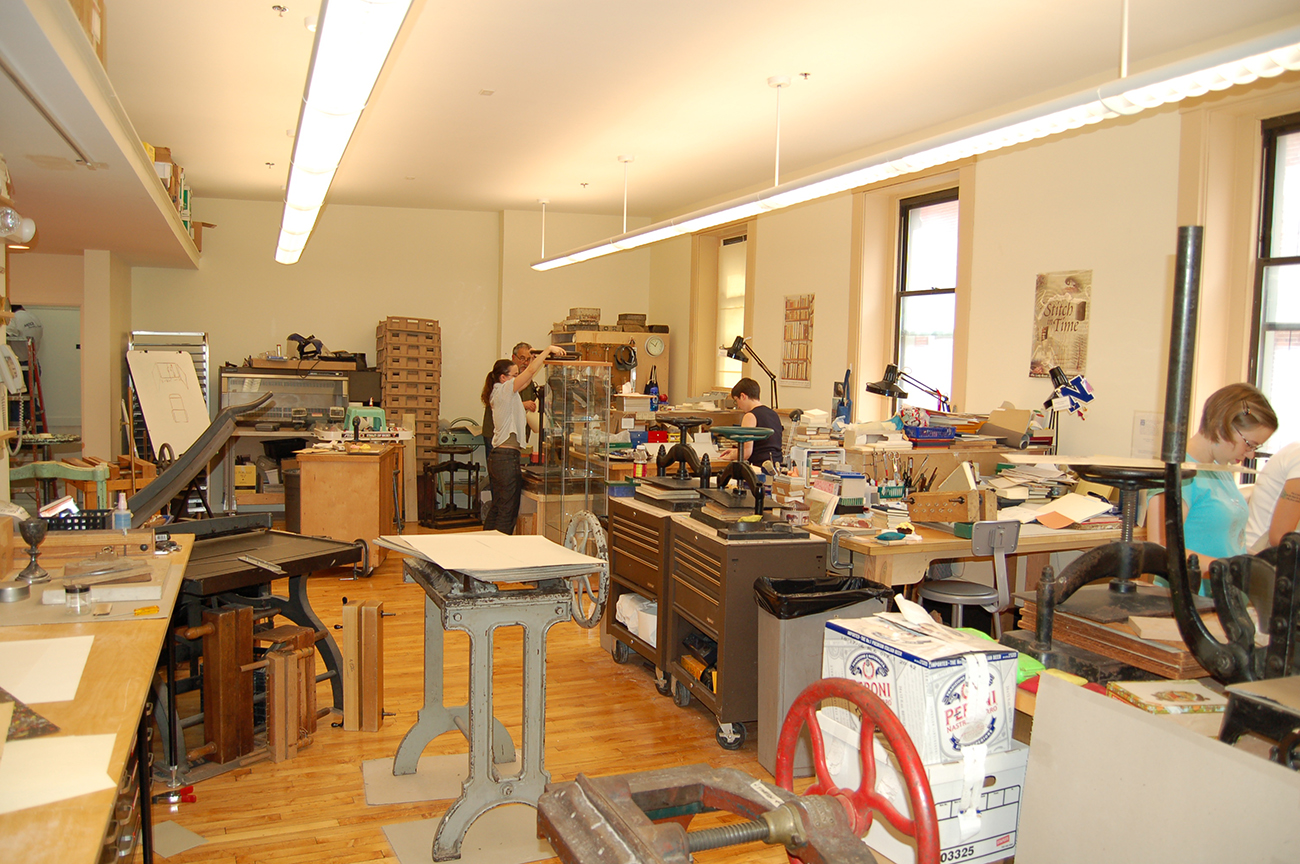
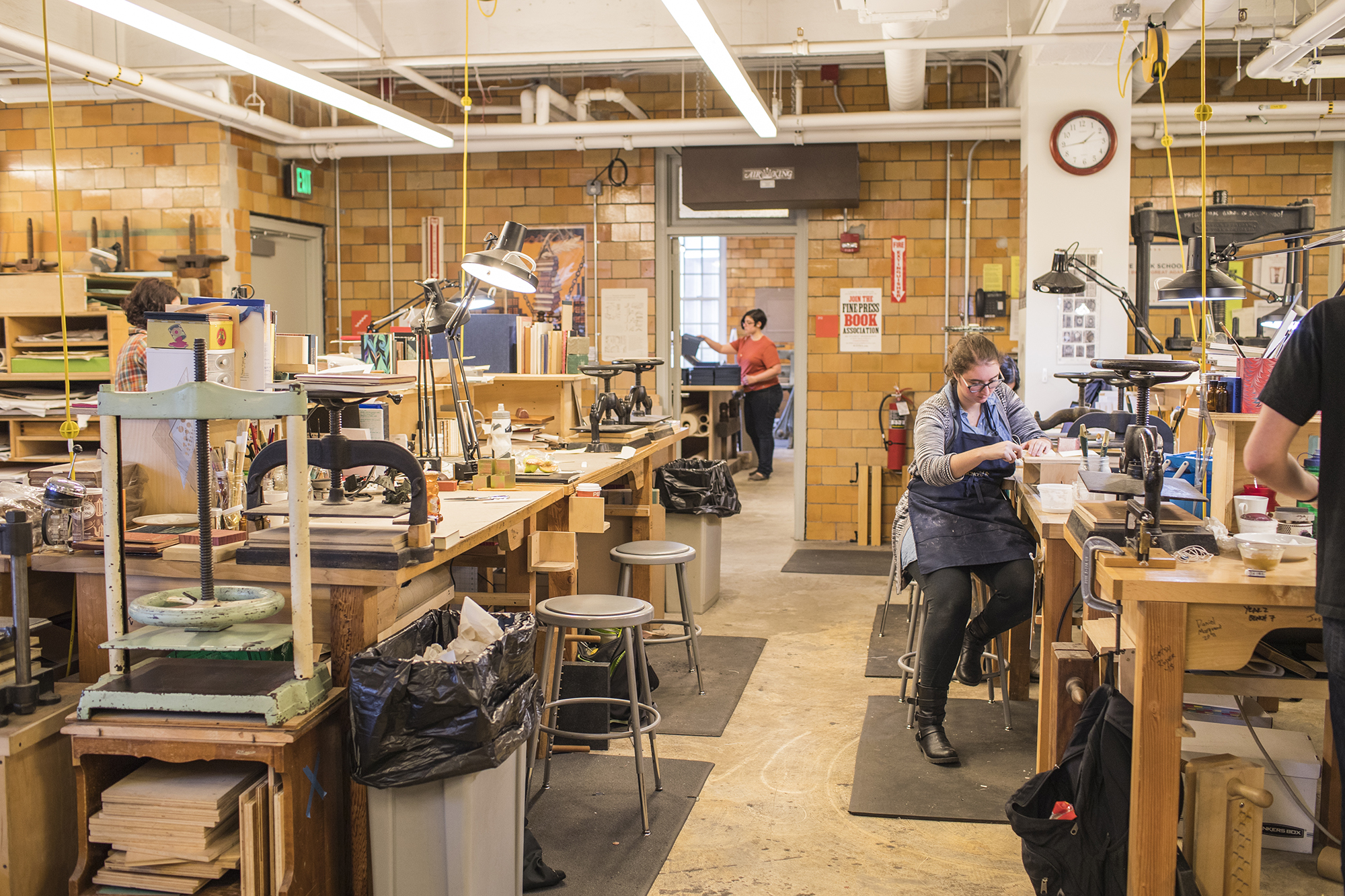
In 1986, Sam moved Harcourt into the former space of a ledger bookbinding firm and, as a result, had a large amount of duplicate equipment, much of which was donated to NBSS.
“It was a happy marriage,” Sam says. “I donated job backers, book presses, sewing frames, a lot of hand tools, and some brass finishing tools. I was also involved with the supply business, importing Dutch linens and English leathers, and provided some of those materials as well.”
Five students enrolled that first year. At that time, there were no other full-time bookbinding bench courses in the country, according to “Rewarding Work.”
The backbone of the curriculum
“Mark and his mentor, Bill, were at the forefront of creating models of historic book structures at the time of the program’s founding, and that remains at the heart of our BB curriculum,” says Jeff, who graduated from NBSS as well as the American Academy of Bookbinding before working at Harcourt Bindery then as a conservation technician at Harvard University’s Tozzer Library.
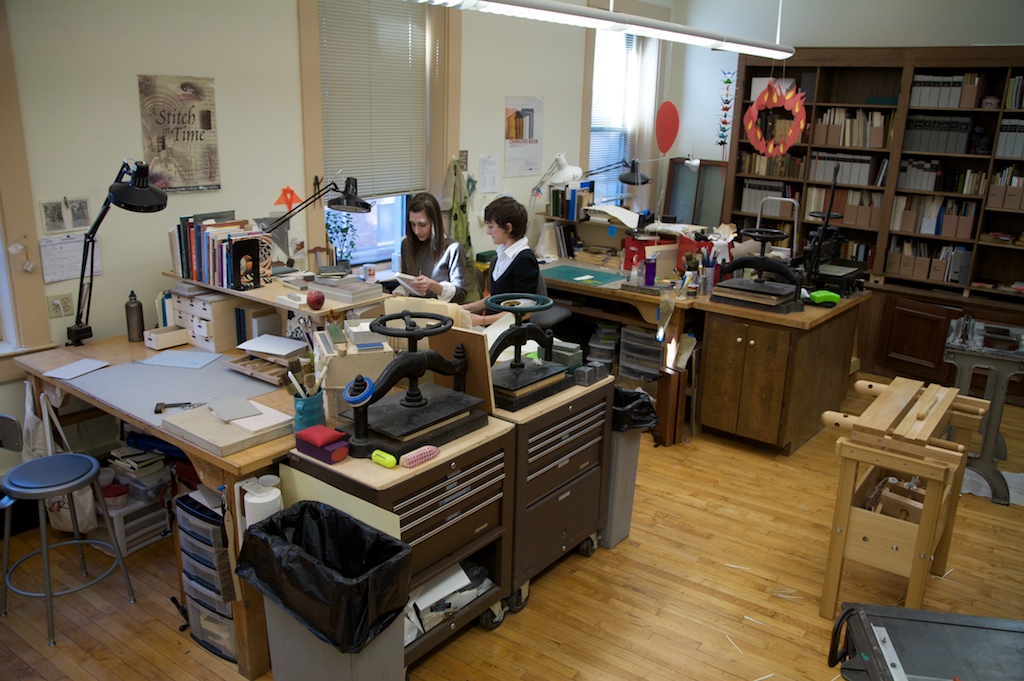
Mark details, “In the broadest sense, I wanted the curriculum to teach traditional hand bookbinding, from the perspective of a book conservator—thinking about things like stresses and structural weaknesses and how to allow for more flexible openings. I started with non-adhesive bindings because, historically, the best and most durable binding structures are based on sewn gatherings. Going back to the Stonyhurst Gospel dating to the late 600s, that structure was the foundation of binding.”
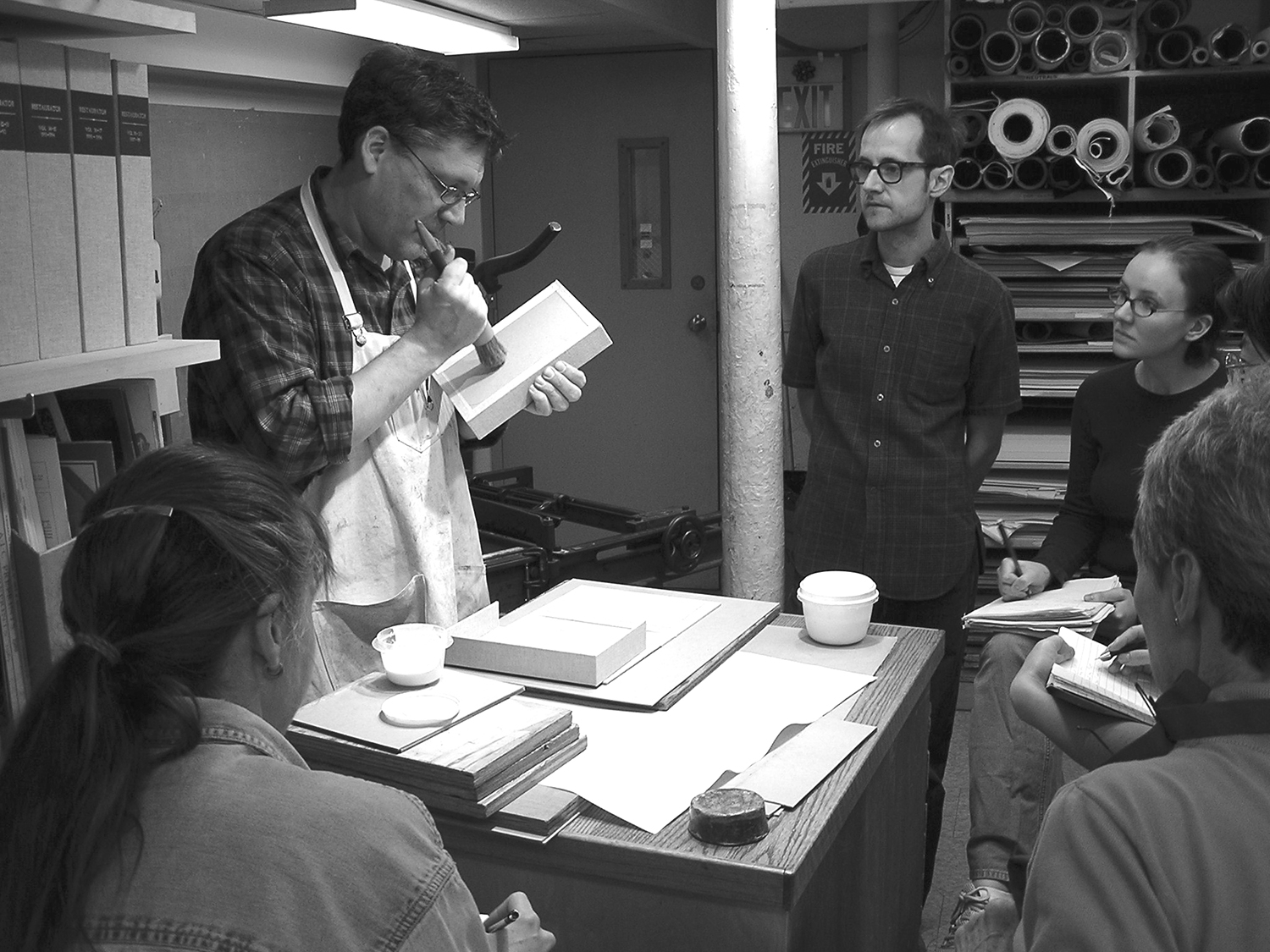
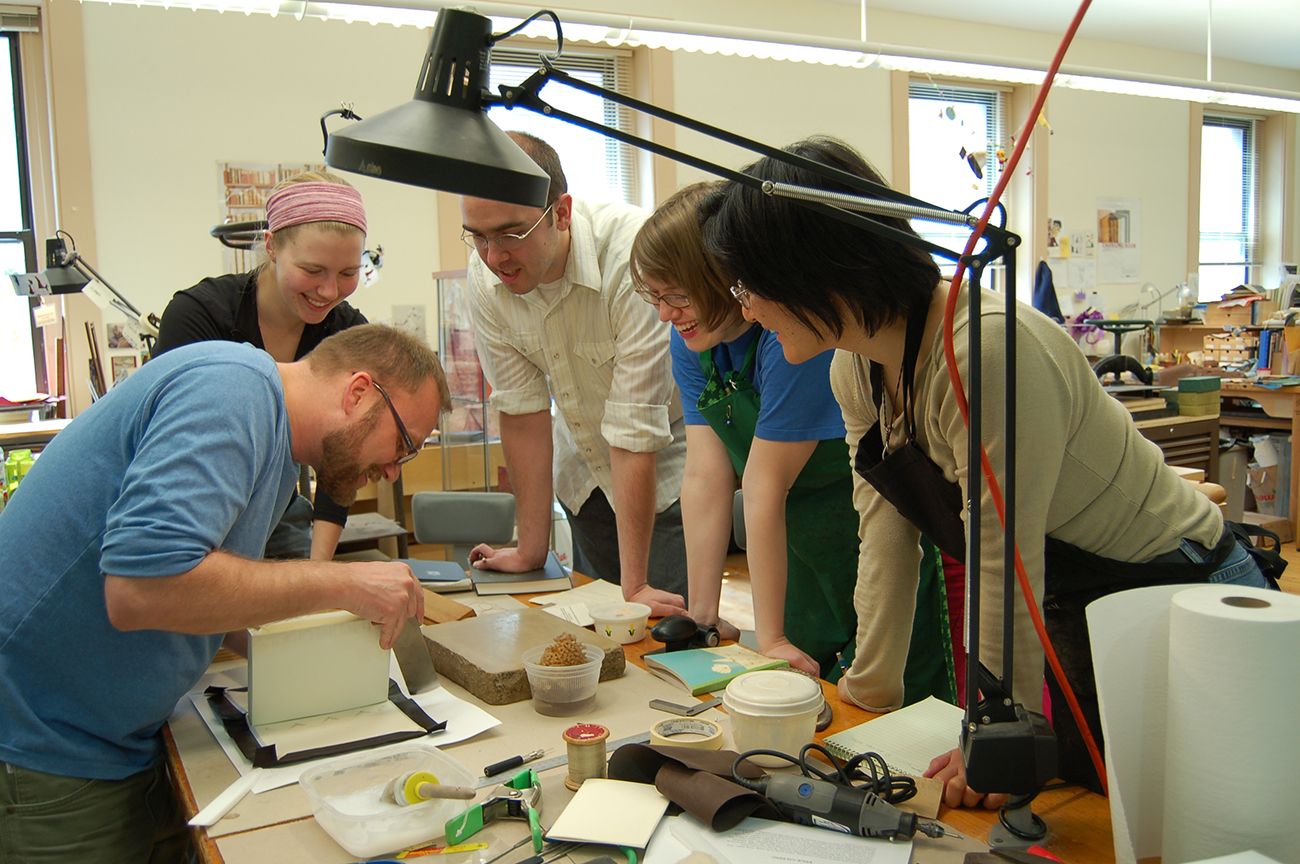
“When students are building or repairing historic bindings, there are, of course, readings and handouts, but it is about being at your bench and following the arc of history and engineering that went into these objects,” notes Martha Kearsley BB ’95, a BB Instructor since 2009. “In the program today, the first project I work with students on is recognizing and repairing a mid-19th-century cloth case binding. Rather than simply giving the students a book to repair, we show them examples and provide thorough specs. Then, we assign them to visit bookstores. This is what our program is about—hands-on work and problem solving.”
“I feel very proud and gratified that I had the opportunity to help start this program—and that it continues to thrive with this core curriculum,” Mark shares. “I certainly did my best, but I was also always open to changing it—I felt that it was a work in progress, and not the last word.”
Adding new pages
Over the last 40 years, four Instructors have led the program: Mark Esser (1986-1994), Sally Key (1994-1998), Mark Andersson BB ’92 (1998-2007), and Jeff Altepeter BB ’99 (2007-today).
“Each Instructor has brought their varied backgrounds to the roles, although we certainly share common threads in our training,” Jeff notes.
Mark Esser and Sally were both apprentices of Bill Anthony. (Sally also studied in England with book historian and conservator Christopher Clarkson, who was closely involved with the Arno River flood recovery work that shaped the modern book conservation field.) Mark Andersson studied with Mark Esser, and Jeff was a student of both Sally and Mark Andersson.
Mark Andersson became BB Department Head in 1998: “The curriculum that I taught while Department Head was probably 75% of what I studied with Mark Esser, but I then added what else I thought would be interesting and valuable for my students to know. I taught Swedish bindings, which are similar to Germanic bindings, because I felt they would be valuable for any students working with Northern European bindings in a library setting. I also taught Danish paper bindings because it’s the perfect way to learn how to pare leather.” These bindings remain on the program’s project list today.
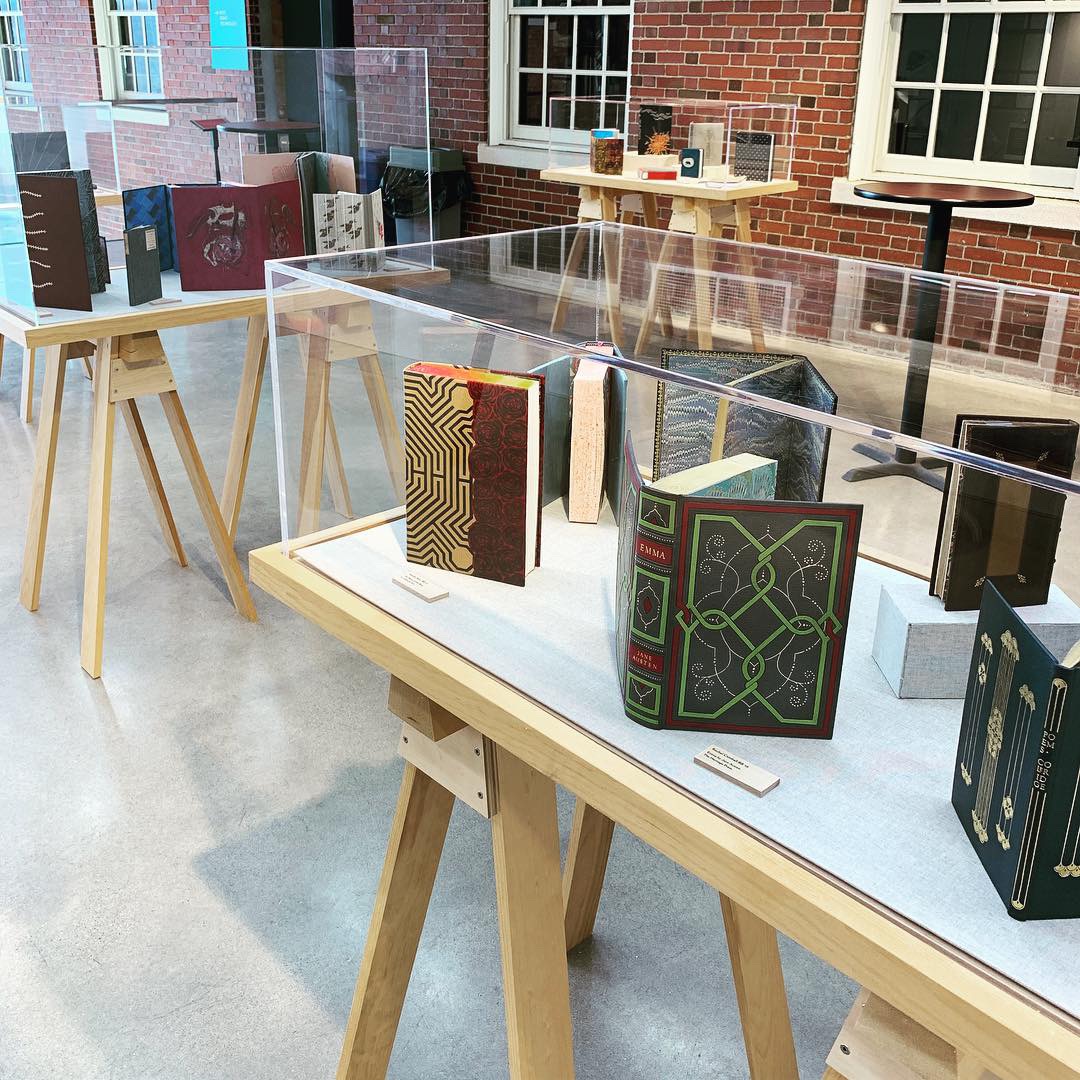
“One important addition to the curriculum has been the development of the ‘set book,’” Jeff notes. “Second-year students are required to design and execute a full leather binding on an assigned text, exhibiting the binding in the annual student and alumni exhibition.” And, since 2013, alumna Erin Fletcher BB ’12 interviews each student on their project for her blog, ‘Flash of the Hand.’”
Embracing community and the next generation
The BB program leaders have always understood that learning also takes place outside the benchroom. This includes skill- and network-broadening experiences through field trips, guest speakers, and close ties with organizations like Designer Bookbinders and the Guild of Book Workers.
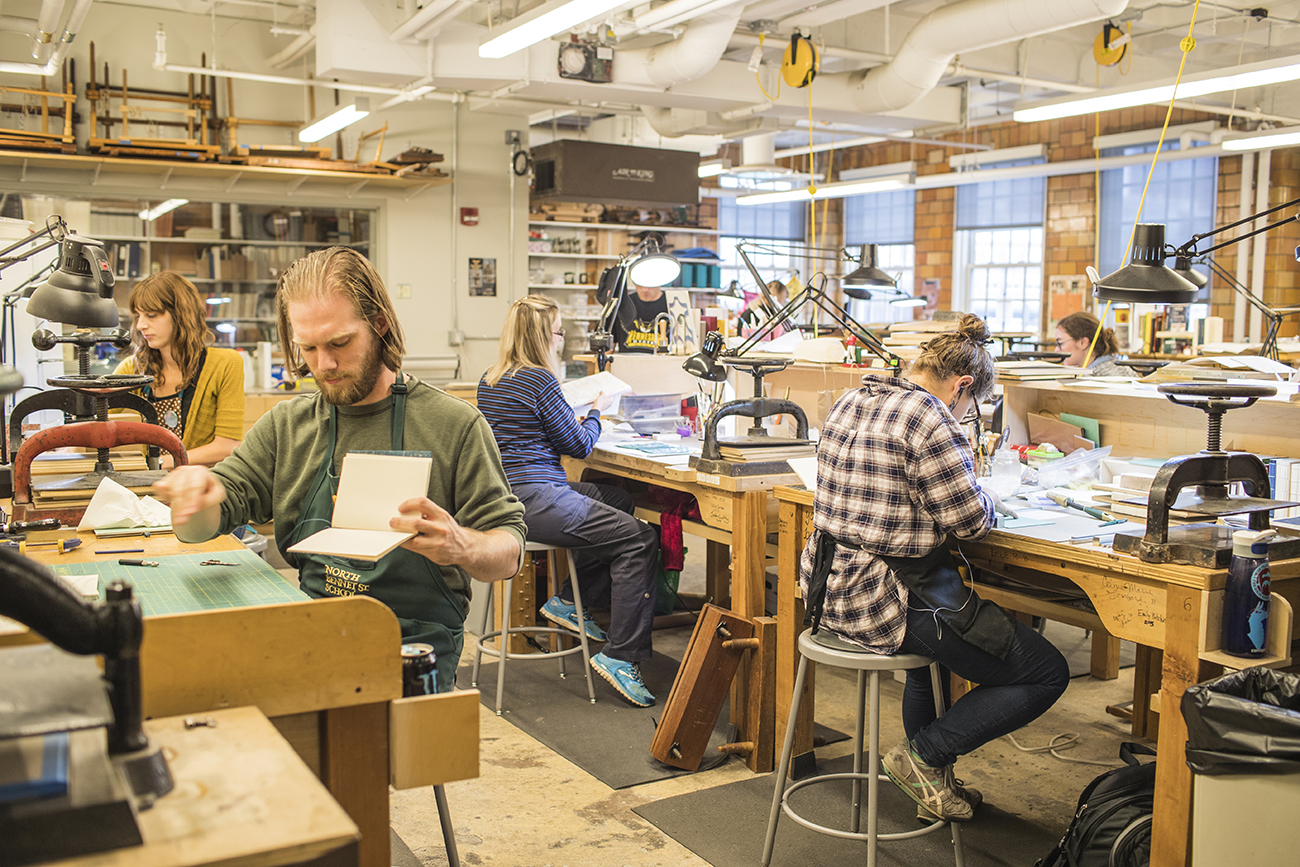
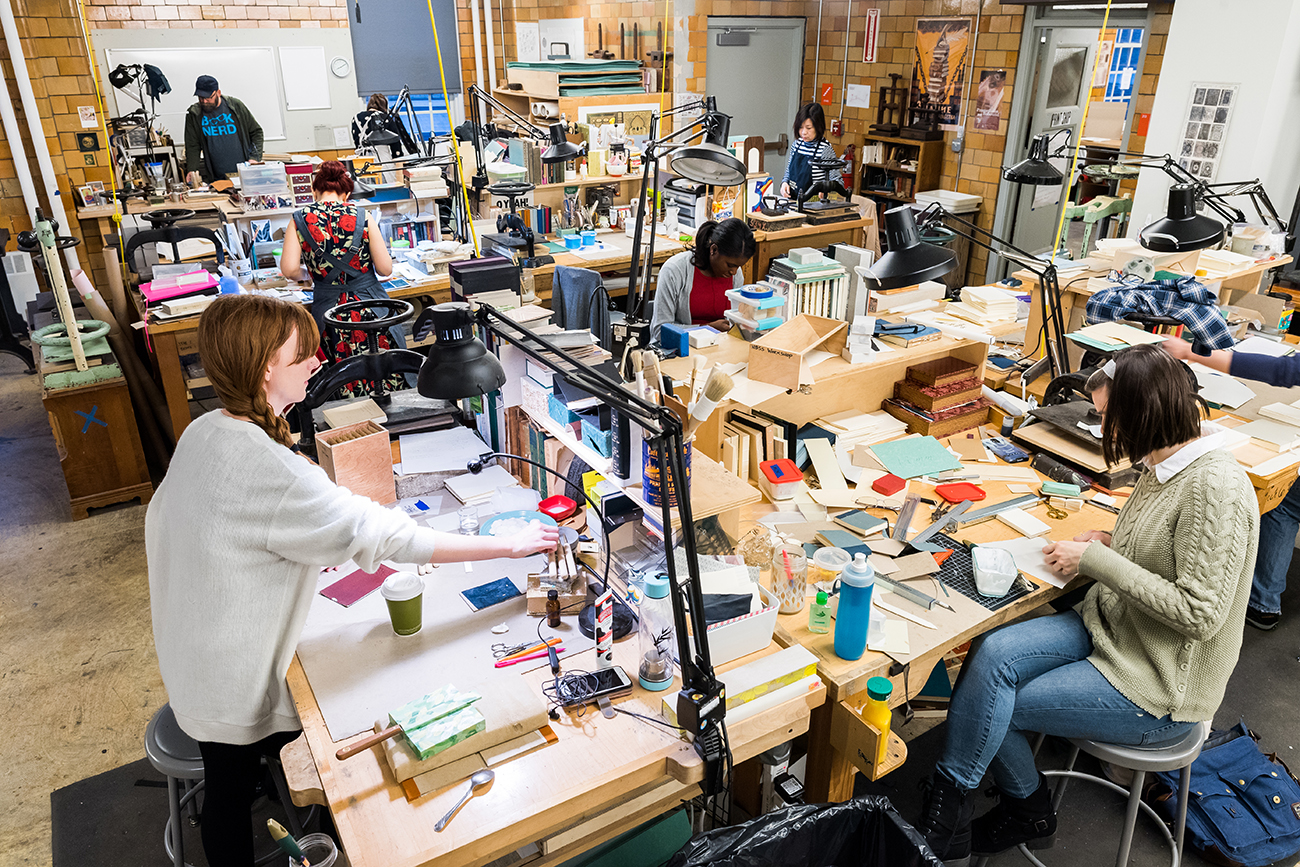
Bookbinding students graduate after two years with the skills to make, restore, and preserve books. They have gone on to hold a wide range of positions, from book conservators and conservation technicians to paper conservators, edition binders, custom binders, and bookbinding teachers.
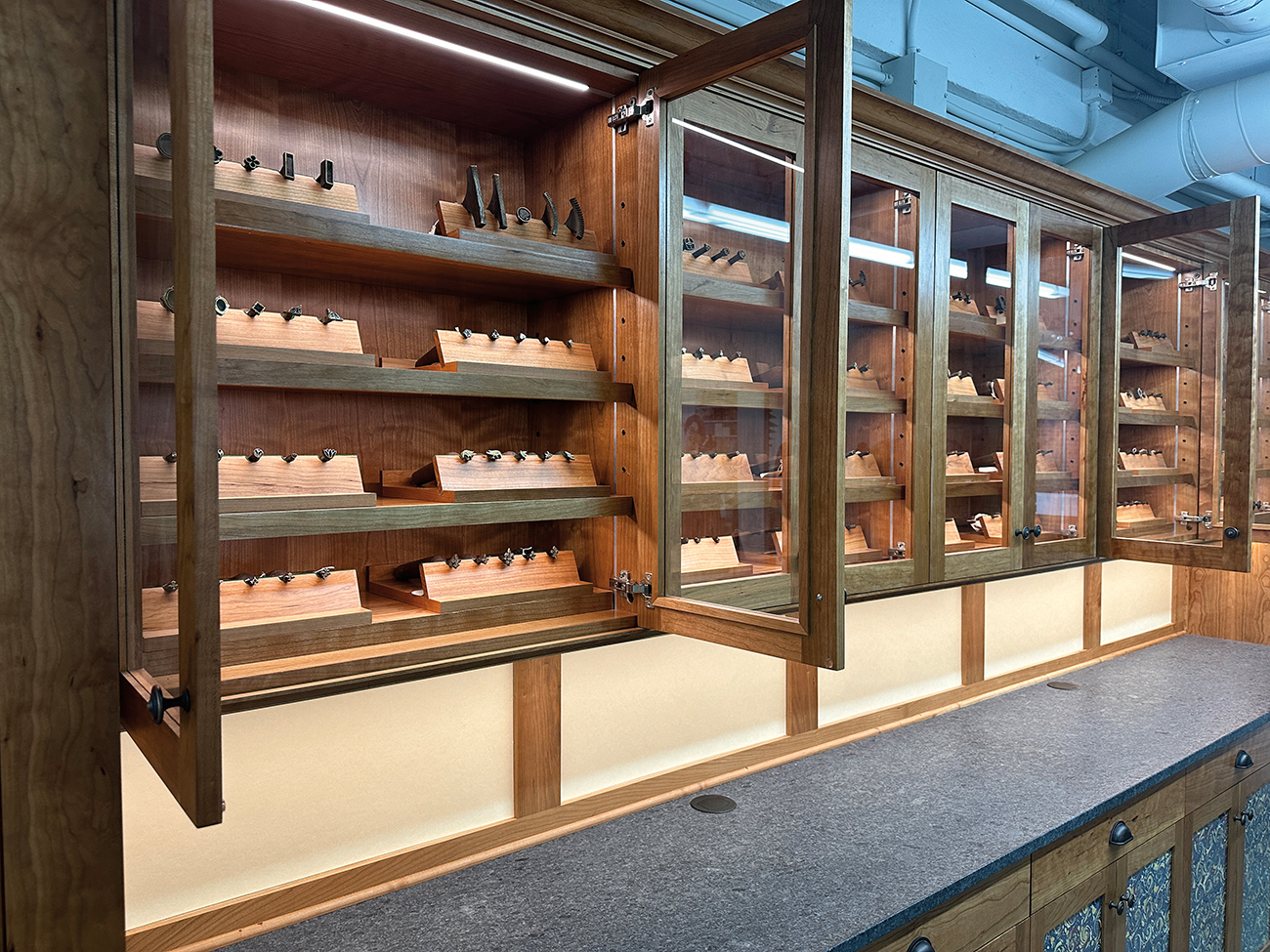
Thanks to generous gifts and grants, the program expanded its finishing tool collection. And in 2018, collectors Kenneth W. Rendell and Shirley McNerney of Boston gifted the program their collection of roughly 2,800 items from Club Bindery in New York City. “The vast collection of tools has allowed me to significantly broaden the curriculum around the decoration of 18th- to 20th-century books,” Jeff shares.
The 40th anniversary exhibition at NBSS will give visitors an opportunity to see how the bindery and tools have expanded over the years. It will also include a juried show of submissions from students, alumni, current and former faculty, as well as Program Advisors and guest instructors.
“Many niche trades like ours have a history of being secretive, but that is not what we stand for today,” Jeff says. “We view events, exhibitions, education, and storytelling as ways to share our knowledge and further the field as a whole.”
Just as Bill Anthony encouraged Mark Esser four decades ago, Jeff says he feels an obligation to pass the field along to the next generation: “I think often about a question the esteemed bookbinder Tini Miura, my teacher at the American Academy of Bookbinding, would often pose: Are you going to let this end with you?”

Announcing the School’s New President: Dr. Sarah B. Cunningham